

Growth
Digital Marketing in Japan: The Complete Guide for Foreign Businesses | Boostify
Learn how foreign businesses can succeed with digital marketing in Japan using SEO, Google Ads, content, and more.

Boostify
July 17, 2026
Expanding into Japan is an exciting opportunity for any business, but reaching Japanese customers requires far more than simply translating your website or launching a few advertising campaigns. The strategies that generate consistent growth in North America, Europe, or Australia don't always produce the same results in Japan. Consumer behaviour, business culture, search habits, and purchasing decisions are shaped by a unique digital landscape that every foreign company needs to understand before investing in marketing.
Japan is one of the world's largest and most digitally connected economies. Millions of people search for products and services online every day, businesses rely heavily on digital channels to research suppliers, and customers often spend significant time evaluating companies before making a purchasing decision. This creates enormous opportunities for international businesses, but it also raises the standard for what customers expect before they choose to engage with your brand.
One of the biggest misconceptions about digital marketing in Japan is that success comes from using the same campaigns, messaging, and tactics that worked in other countries. In reality, Japanese audiences often place greater importance on trust, credibility, consistency, and long term relationships. They research carefully, compare multiple providers, and expect businesses to demonstrate expertise before they are willing to make contact. Your digital presence becomes your first impression, and in many cases, it determines whether a potential customer decides to learn more about your business or continue searching elsewhere.
Whether you're a B2B SaaS company, technology provider, manufacturer, consultancy, or professional service firm, understanding how digital marketing works in Japan can significantly improve your chances of building sustainable growth. A well planned strategy not only increases visibility but also helps establish the trust that Japanese buyers look for before starting a business relationship.
This guide has been created specifically for foreign businesses that want to grow in Japan. Rather than focusing on legal procedures or market entry requirements, we'll explore how digital marketing actually works, how Japanese customers discover new businesses, and the strategies that help international companies build credibility, generate qualified leads, and achieve long term success.
By the end of this guide, you'll have a clear understanding of the key digital marketing channels in Japan, how they work together, and how to create a strategy that aligns with the expectations of Japanese customers and businesses.
Many foreign businesses enter Japan expecting the same digital marketing strategies that worked in their home country to deliver similar results. After all, Google is still the dominant search engine, social media platforms are widely used, and online advertising is a common way to reach customers. On the surface, the market may seem familiar.
However, the way Japanese consumers and businesses discover, evaluate, and choose companies is often very different.
Success in Japan is not determined solely by who has the largest advertising budget or the most visually appealing website. Instead, buyers often place greater emphasis on trust, credibility, consistency, and long term commitment. Before contacting a company, they usually spend considerable time researching its reputation, comparing competitors, reading educational content, and looking for evidence that the business is reliable.
This behaviour is particularly noticeable in the B2B market. Decision makers rarely make purchasing decisions after a single interaction. A recommendation from a colleague, a Google search, a visit to your website, a case study, and several follow up visits may all contribute to the final decision. Every digital touchpoint helps shape how your company is perceived.
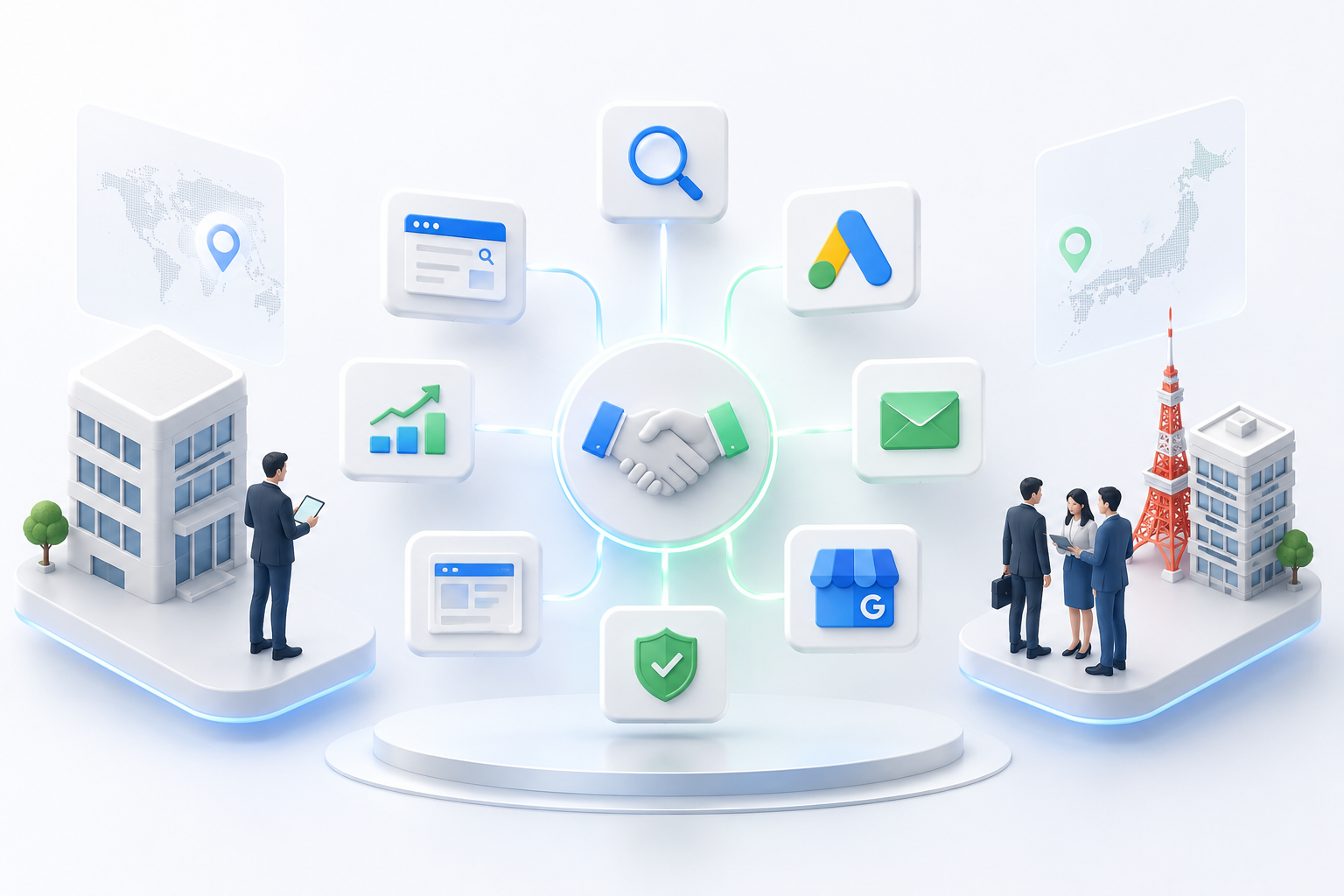
Another important difference is that digital marketing channels in Japan work best when they support one another rather than operating independently. Search engine optimization helps potential customers discover your business organically. Google Ads allows you to appear in front of buyers with immediate intent. A professional website builds confidence, while educational content answers questions and demonstrates expertise. Together, these channels create a digital experience that encourages prospects to move from awareness to enquiry.
Language and localization also play a significant role. Translating English content into Japanese is rarely enough. Japanese audiences expect communication that feels natural, culturally appropriate, and relevant to the local market. Even businesses targeting English speaking decision makers in Japan benefit from demonstrating that they understand the country's business environment, customer expectations, and purchasing behaviour.
Perhaps the biggest difference is that digital marketing in Japan is a long term investment rather than a short term campaign. While paid advertising can generate immediate visibility, sustainable growth usually comes from consistently building authority, publishing valuable content, improving organic visibility, and strengthening your reputation over time. Businesses that approach Japan with patience and a long term mindset are often the ones that achieve the strongest results.
Understanding these differences is the foundation of every successful marketing strategy. Once you recognize how Japanese customers research businesses and make purchasing decisions, it becomes much easier to choose the right channels, create content that resonates, and invest in marketing activities that support long term growth.
Want to dive deeper into how Japanese companies evaluate suppliers before making contact? Read our complete guide to How Japanese B2B Buyers Research Companies.
One of the biggest mistakes foreign businesses make when entering Japan is assuming that customers make purchasing decisions after a single interaction. In reality, digital marketing in Japan is rarely a straight path from advertisement to sale. Whether you are targeting consumers or B2B decision makers, customers typically move through several stages before they feel confident enough to contact your business.
Every interaction shapes their perception of your company. A prospect may first discover your business through a Google search, a recommendation from a colleague, a LinkedIn post, or an industry event. Instead of making an immediate enquiry, they usually begin researching your business in more detail. They visit your website, read your content, compare you with competitors, and evaluate whether your company appears trustworthy and capable of delivering long term value.
For B2B companies, this research process is often even more thorough. Purchasing decisions may involve marketing teams, procurement departments, technical specialists, and senior management. Each stakeholder is looking for different information, but they all share one common objective: reducing risk before choosing a new supplier.
This is why every part of your digital presence matters. Your website, blog articles, Google search visibility, company information, and educational content all contribute to the impression potential customers form before they ever speak to your sales team. By the time an enquiry arrives, your prospect has often already decided whether your business deserves serious consideration.
Rather than treating SEO, paid advertising, content marketing, and website design as separate activities, successful businesses view them as connected parts of a single customer journey. Search engines help people discover your business, your website introduces your expertise, educational content builds confidence, and every positive interaction increases the likelihood that a visitor becomes a qualified lead.
The goal of digital marketing in Japan is not simply to attract visitors. It is to guide potential customers through a series of meaningful interactions that gradually build familiarity, confidence, and trust. Companies that consistently provide helpful information at every stage of this journey are far more likely to generate high quality enquiries and establish long term business relationships.
The journey below illustrates how many Japanese B2B buyers evaluate a company before becoming a customer.
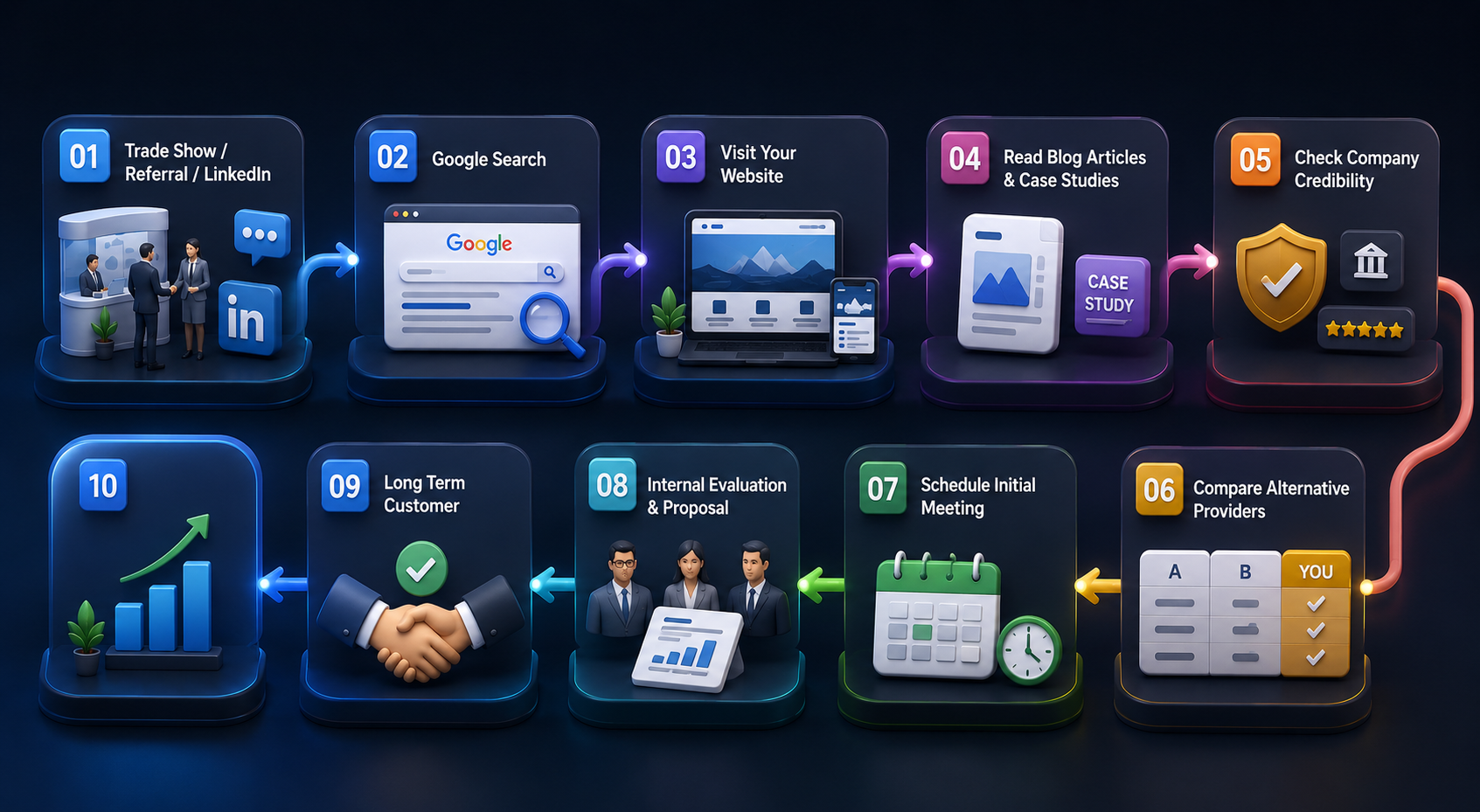
This journey demonstrates an important principle: customers rarely buy because they saw one advertisement. They buy because every interaction reinforces confidence in your business.
A well planned digital marketing strategy ensures that every stage of this journey works together. Strong SEO improves discoverability, informative blog content answers important questions, a professional website builds credibility, and ongoing communication helps move prospects closer to becoming customers.
Want to explore every stage of the digital customer journey in more detail? Read our complete guide to Navigating the Digital Customer Journey in Japan.
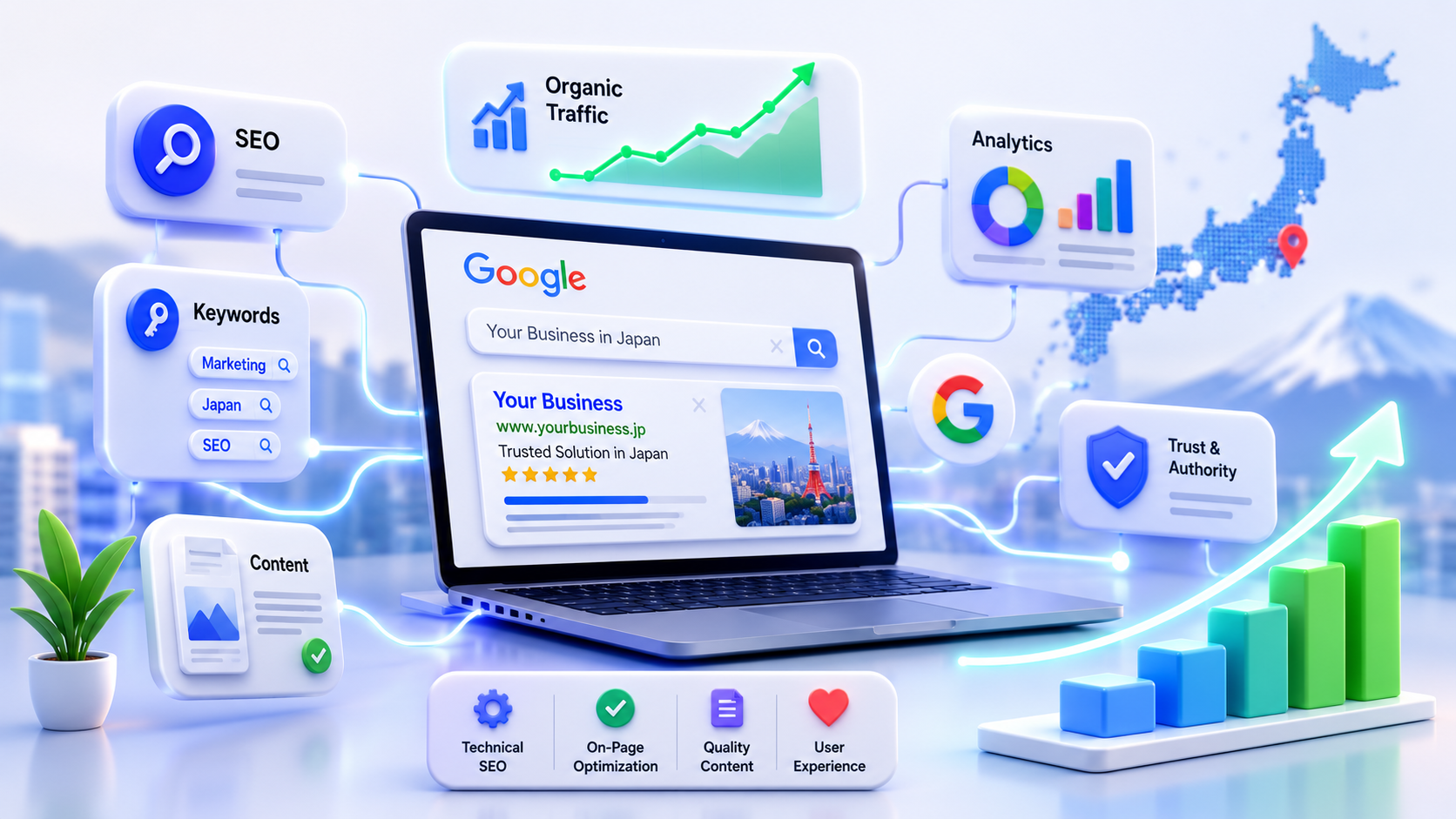
For many foreign businesses, search engine optimization is one of the most effective long term investments they can make when entering the Japanese market. While paid advertising can generate immediate visibility, SEO helps your business attract qualified visitors consistently without paying for every click.
Google remains the dominant search engine in Japan, making organic search an essential channel for businesses looking to reach both consumers and B2B decision makers. Every day, potential customers search for products, services, suppliers, and solutions online. Appearing in those search results at the right moment allows your business to connect with people who are already looking for what you offer.
However, successful SEO in Japan involves much more than translating an English website into Japanese. Search behaviour, keyword intent, user expectations, and content preferences can differ significantly from other markets. Japanese users often conduct detailed research before contacting a company, comparing multiple websites and looking for clear signs of expertise and credibility.
For international businesses targeting English speaking companies operating in Japan, the challenge is slightly different. Rather than competing only for Japanese language keywords, your goal is to become a trusted resource for foreign decision makers searching for marketing services, business solutions, or industry expertise within Japan. This is where high quality English content, supported by a strong internal linking strategy and a well organized website structure, can create a significant competitive advantage.
Technical optimization is equally important. Fast loading pages, mobile friendly design, clear navigation, structured data, and logical internal linking all help search engines understand your website while improving the experience for visitors. Strong technical foundations make it easier for both users and search engines to discover your content.
Content also plays a central role in successful SEO. Publishing valuable articles that answer real questions helps build topical authority over time. Instead of creating isolated blog posts, successful businesses develop connected content clusters that explore a subject from multiple perspectives. This not only improves search visibility but also encourages visitors to explore additional resources across your website.
SEO should never be viewed as a one time project. Search algorithms evolve, competitors publish new content, and customer behaviour changes over time. Businesses that consistently improve their websites, publish useful content, and strengthen their authority are far more likely to achieve sustainable rankings and long term organic growth.
Want to learn how to rank higher on Google Japan? Read our complete guide to SEO in Japan for Foreign Businesses
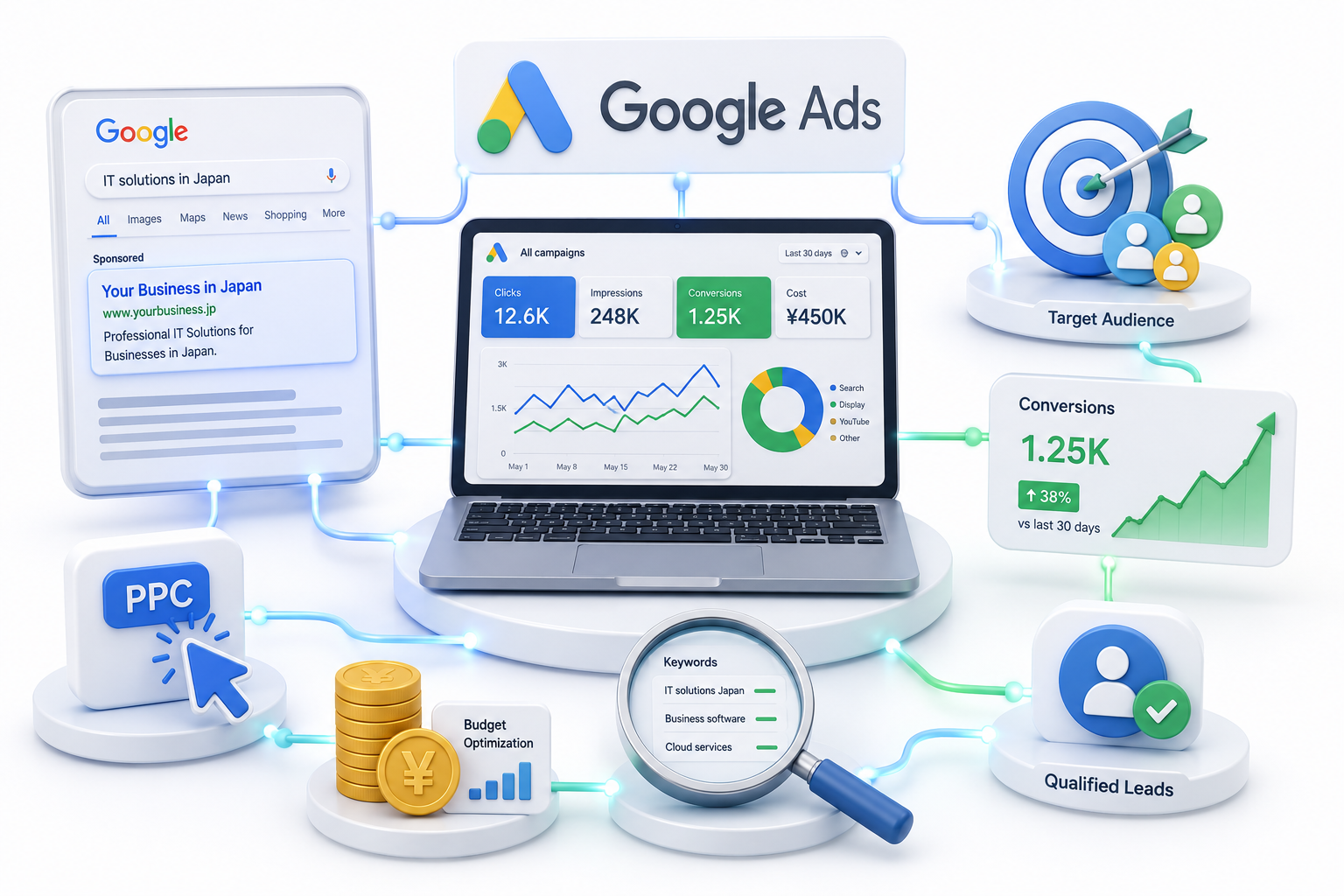
While SEO is one of the most effective long term strategies for building sustainable organic traffic, many businesses entering Japan also need a way to generate visibility and enquiries more quickly. This is where Google Ads can play a valuable role.
Google remains the leading search engine in Japan, making Google Search Ads one of the most effective ways to reach potential customers who are actively looking for products or services. Unlike traditional advertising, search campaigns allow your business to appear precisely when someone is searching for solutions related to your industry, increasing the likelihood of attracting qualified leads.
However, running successful Google Ads campaigns in Japan requires more than simply translating existing advertisements from another market. Search behaviour, keyword intent, competition, and customer expectations often differ from country to country. A campaign that performs well elsewhere may require significant adjustments before it delivers consistent results in Japan.
Choosing the right keywords is one of the most important factors. Some businesses target Japanese language searches, while others focus on English speaking professionals, international companies operating in Japan, or niche B2B audiences. Understanding who you want to reach helps determine the most effective campaign structure and messaging.
Your landing page also plays a major role in campaign performance. Even the most carefully optimized advertisements can struggle if visitors arrive on a page that does not clearly communicate your value, answer their questions, or inspire confidence. A fast, professional, and well structured website is essential for converting paid traffic into enquiries.
Google Ads also works best when combined with other digital marketing channels rather than operating in isolation. Paid advertising can generate immediate visibility while SEO builds long term authority, content marketing strengthens credibility, and email marketing helps nurture prospects who are not yet ready to make a purchasing decision. Together, these channels create a stronger and more sustainable marketing strategy.
Like SEO, Google Ads should be viewed as an ongoing process rather than a one time setup. Successful campaigns require continuous testing, keyword refinement, audience analysis, and conversion optimization to improve performance over time. Businesses that regularly review campaign data and make informed adjustments are more likely to achieve stronger results while maximizing their advertising budget.
Want to learn how to create profitable Google Ads campaigns in Japan? Read our complete guide to Google Ads in Japan for Foreign Businesses.
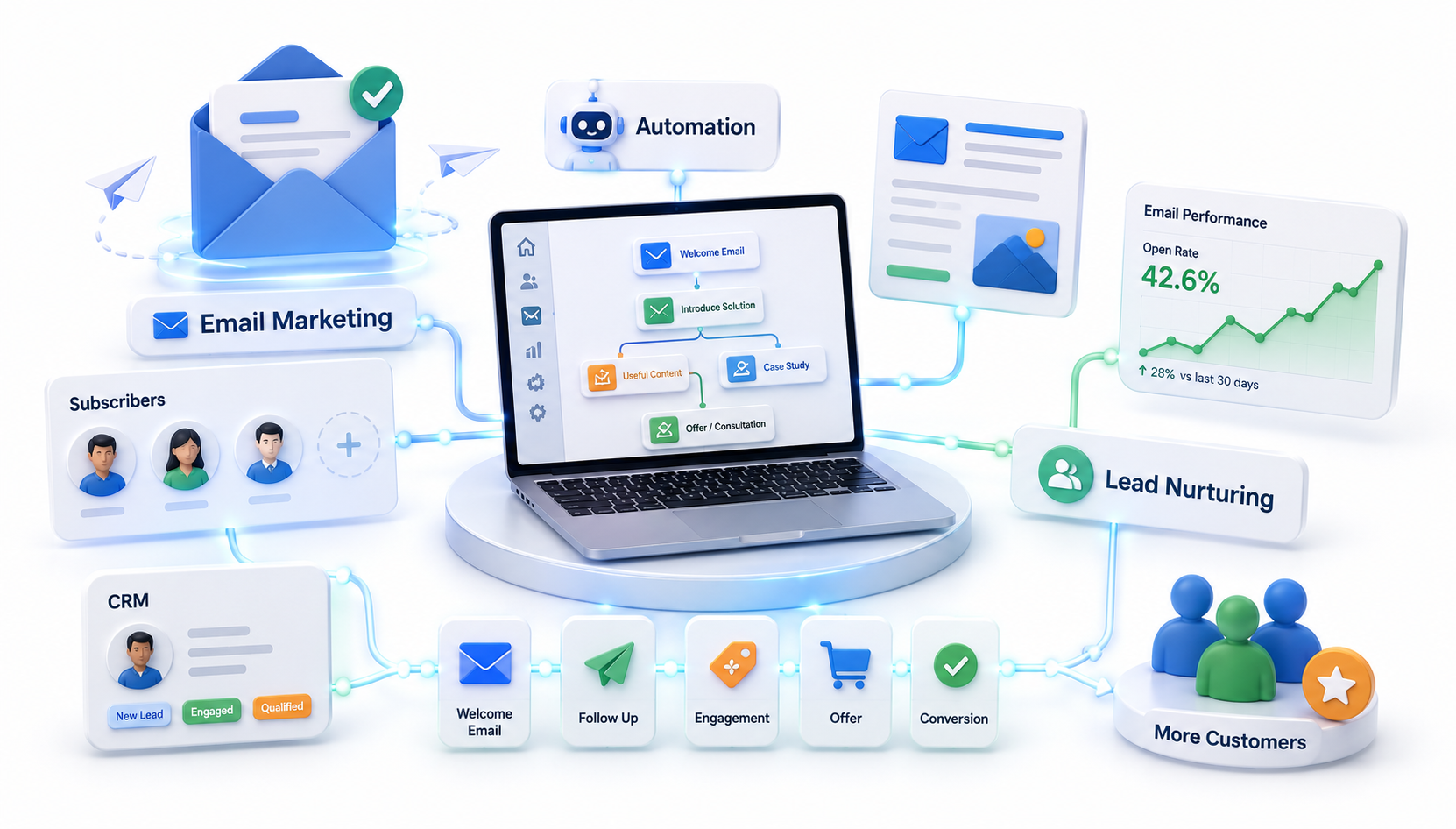
While newer marketing channels continue to emerge, email marketing remains one of the most effective ways to build relationships, nurture leads, and generate repeat business in Japan. For both B2B and B2C companies, email provides a direct communication channel that allows businesses to stay connected with prospects long after their first interaction.
Many companies make the mistake of viewing email marketing as simply sending promotional newsletters. In reality, successful email marketing is about delivering relevant, valuable content that guides potential customers through different stages of their buying journey. Whether someone downloads a guide, submits an enquiry, or requests a consultation, email helps maintain engagement while building confidence in your business over time.
This is particularly important in Japan, where purchasing decisions are often made carefully and involve multiple stakeholders. Prospects may spend weeks or even months researching suppliers before making contact. Consistent and helpful email communication allows your business to remain visible during this evaluation process without relying solely on repeated advertising.
Effective email marketing begins with understanding your audience. Instead of sending identical messages to every subscriber, businesses achieve better results by segmenting their audience based on interests, behaviour, or where they are in the customer journey. A new website visitor should not receive the same content as an existing customer or someone who has already requested a proposal.
Automation also plays a significant role in modern email marketing. Welcome sequences, educational campaigns, follow up emails, abandoned enquiry reminders, and lead nurturing workflows allow businesses to communicate consistently while saving time. These automated journeys help ensure that no opportunity is overlooked while delivering a more personalized experience to each prospect.
However, email marketing performs best when it is integrated with your wider digital marketing strategy. SEO helps attract visitors, Google Ads generates immediate traffic, valuable content encourages people to subscribe, and email keeps those relationships active until prospects are ready to take the next step. Rather than competing with other marketing channels, email strengthens the effectiveness of each one.
As with every marketing activity, success depends on continuous improvement. Monitoring open rates, click through rates, conversions, and subscriber engagement helps businesses understand what resonates with their audience and refine future campaigns. Over time, this data driven approach leads to stronger customer relationships and more consistent business growth.
Want to build high converting email campaigns? Read our complete guide to Email Marketing in Japan for Foreign Businesses.
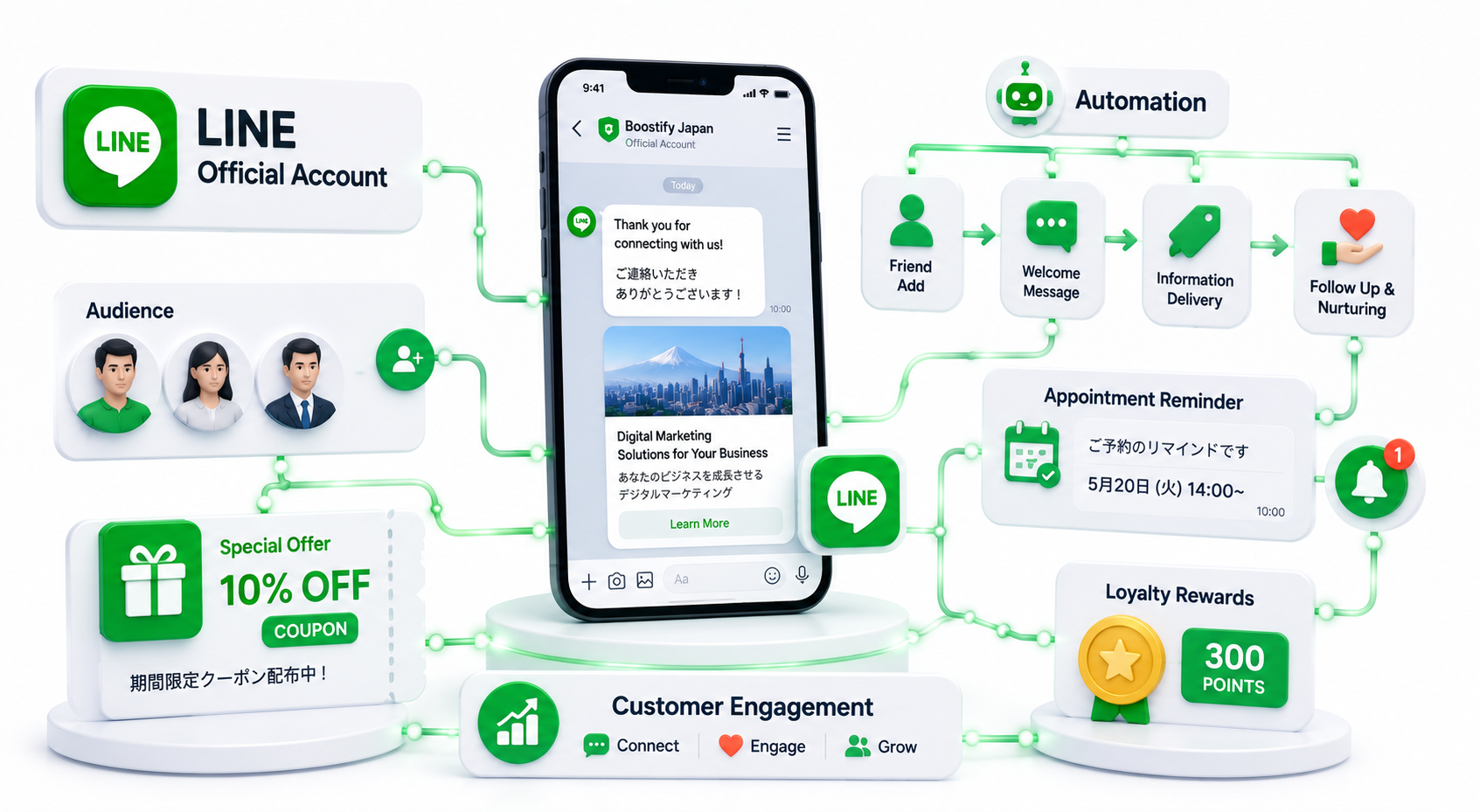
When foreign businesses think about digital marketing, they often focus on search engines, email campaigns, and social media platforms such as LinkedIn or Instagram. While those channels certainly have an important role, there is one platform that is deeply integrated into everyday communication across Japan: LINE.
With millions of active users, LINE is much more than a messaging application. It has become a platform where businesses communicate with customers, share promotions, provide customer support, send appointment reminders, distribute exclusive offers, and build long term relationships. For many Japanese consumers, connecting with a business through LINE feels more natural than exchanging emails.
For businesses entering Japan, LINE can become a valuable tool for maintaining customer engagement after the initial enquiry. Rather than relying entirely on email communication, companies can use official LINE accounts to share updates, announce new services, deliver personalized offers, and encourage repeat interactions. This creates an additional touchpoint that helps strengthen customer relationships over time.
LINE marketing is particularly effective when integrated with your broader digital marketing strategy. A customer may discover your business through Google Search, visit your website, and submit an enquiry before choosing to follow your LINE Official Account. From there, your business can continue providing valuable information, promotions, or updates that keep your brand top of mind without requiring constant advertising.
Like any marketing channel, success depends on providing genuine value rather than sending excessive promotional messages. Businesses that use LINE to educate, support, and communicate consistently are more likely to build trust and encourage long term customer loyalty.
Although LINE is often associated with B2C businesses, it can also support B2B companies by improving communication, simplifying event registrations, sharing important announcements, and nurturing relationships with existing clients. Choosing the right communication channel depends on your audience, but understanding how LINE fits into Japan's digital ecosystem can give foreign businesses a significant advantage.
Want to learn how businesses use LINE to generate leads and build stronger customer relationships? Read our complete guide to LINE Marketing in Japan for Foreign Businesses.
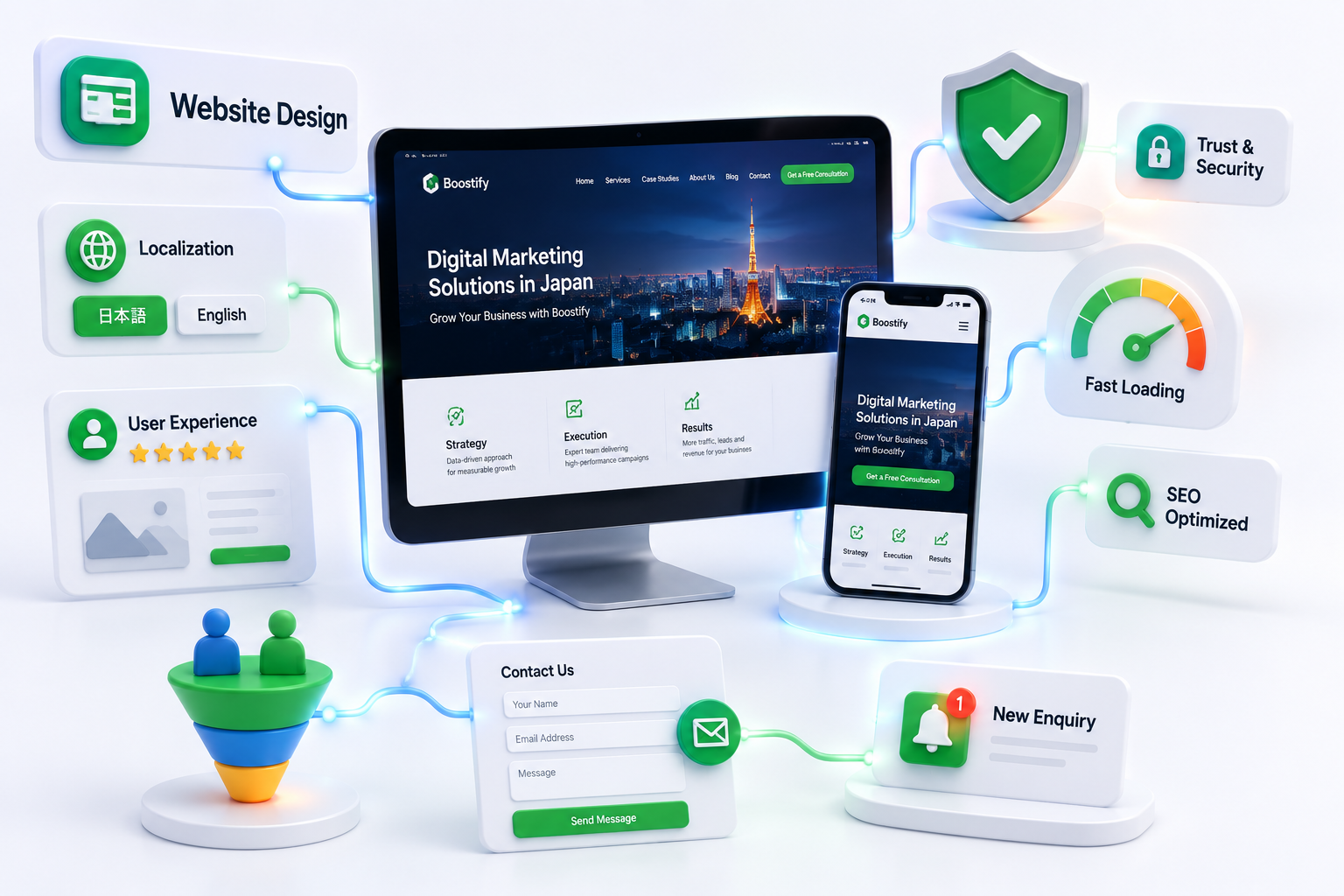
Your website is often the first impression potential customers have of your business. In Japan, that first impression carries significant weight. Before contacting a company, prospects typically spend time exploring its website to understand its expertise, credibility, and whether it appears trustworthy enough to do business with.
For many foreign companies, one of the biggest mistakes is assuming that translating an existing website into Japanese is enough. While accurate translation is important, successful localization goes much further. Japanese visitors expect websites to feel natural, professionally presented, and designed with local user expectations in mind. A website that appears unfamiliar or difficult to navigate can reduce confidence long before a visitor reads your services.
Effective website localization considers both language and user experience. Navigation should be intuitive, information should be easy to find, and important trust signals should be visible throughout the site. Clear contact information, company details, case studies, client testimonials, frequently asked questions, and well organized service pages all help reassure visitors that your business is reliable and established.
Performance is equally important. Japanese users expect websites to load quickly across both desktop and mobile devices. Slow pages, confusing layouts, or outdated designs can increase bounce rates and reduce conversions, regardless of how much traffic your marketing campaigns generate. A modern, responsive website not only improves the user experience but also supports search engine optimization by meeting Google's technical quality standards.
For businesses targeting international companies operating in Japan, an English website can still perform extremely well when it is built specifically for that audience. Instead of translating content word for word, the focus should be on addressing the questions, concerns, and buying journey of foreign decision makers doing business in Japan. Content should educate, demonstrate expertise, and guide visitors naturally toward taking the next step.
Your website should also support every other digital marketing channel. Visitors arriving from Google Search, paid advertising, email campaigns, or your Google Business Profile should experience a consistent brand message and a clear path toward making an enquiry. When every page works together to answer questions and build confidence, your website becomes more than an online brochure. It becomes one of your most valuable business development tools.
Rather than viewing website design as a one time project, successful businesses treat it as a continuously improving asset. By analysing visitor behaviour, testing new layouts, refining content, and improving conversion paths, companies can steadily increase the number of enquiries generated from existing traffic.
Want to create a website that builds trust and generates more enquiries in Japan? Read our complete guide to Website Design in Japan for Foreign Businesses.
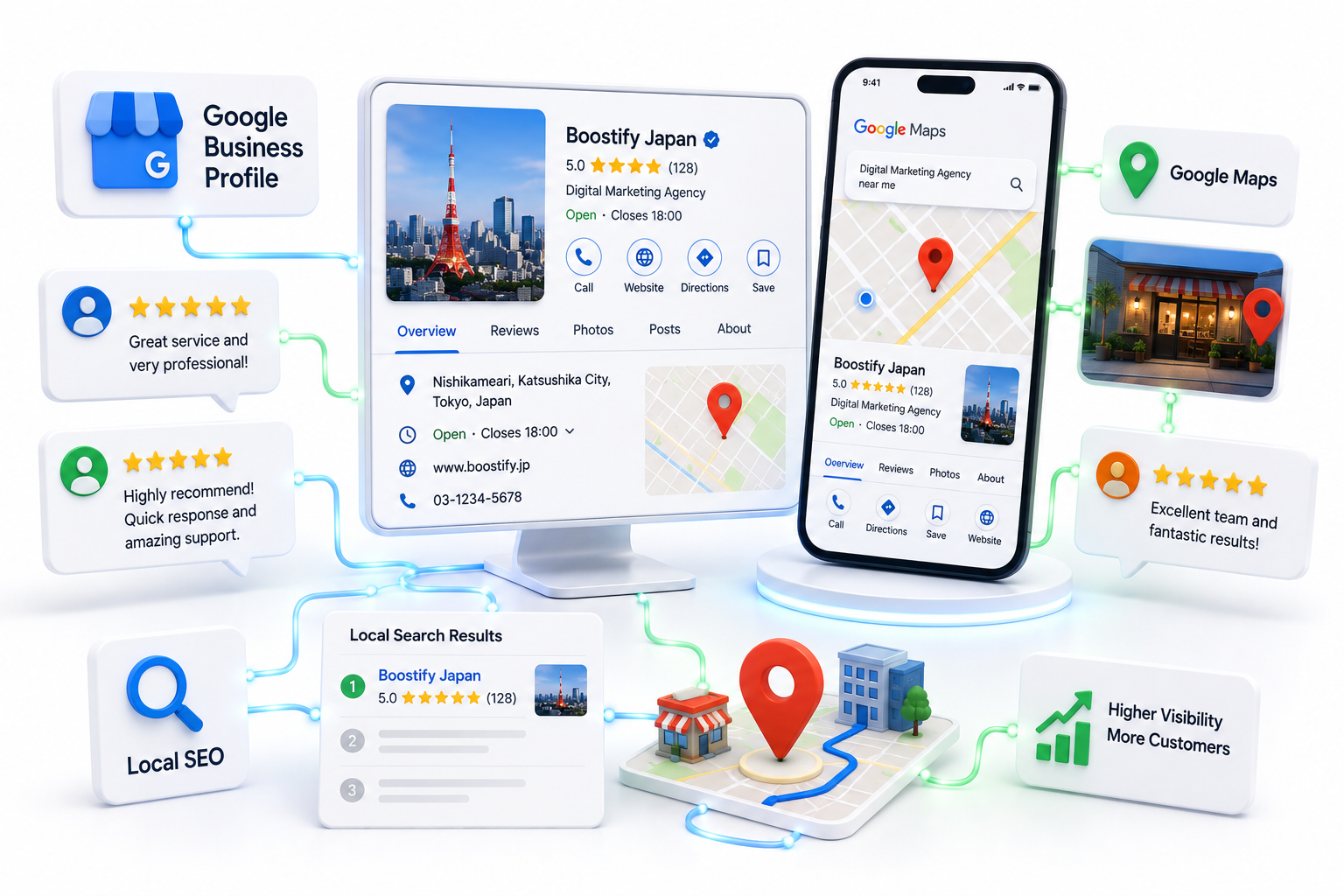
For businesses that serve customers in specific cities or regions of Japan, appearing in local search results can be just as important as ranking in Google's organic search results. Whether someone searches for a digital marketing agency in Tokyo, a web design company near them, or a local service provider, Google often displays map results before traditional website listings. This makes Google Business Profile and Local SEO essential components of a successful digital marketing strategy.
A well optimized Google Business Profile helps your business appear in Google Search and Google Maps when potential customers are actively looking for services in your area. Your business profile gives visitors quick access to important information such as your location, contact details, business hours, website, customer reviews, and photos. In many cases, it becomes the first interaction a customer has with your business before they even visit your website.
Local SEO goes beyond creating a business profile. It focuses on improving your visibility for location based searches by optimizing your website, maintaining accurate business information, earning positive customer reviews, and building local relevance through high quality content and citations. These signals help Google understand where your business operates and which searches your company should appear for.
For foreign businesses entering Japan, Local SEO is particularly valuable if you have a physical office, serve clients in a specific city, or want to establish credibility within a local market. A strong local presence not only improves visibility but also builds trust with potential customers who prefer working with businesses that have a verified presence in Japan.
Your Google Business Profile should also work together with the rest of your digital marketing strategy. Visitors who discover your business through Google Maps should arrive at a professional website that clearly explains your services, showcases customer success stories, and provides an easy way to get in touch. Likewise, your website should reinforce the same information displayed on your business profile, creating a consistent experience across every customer touchpoint.
Like SEO, Local SEO is an ongoing process rather than a one time setup. Regularly updating your business profile, responding to customer reviews, publishing posts, adding new photos, and refining your website all contribute to stronger local visibility over time. Businesses that consistently maintain their online presence are more likely to earn trust and attract qualified local enquiries.
Want to improve your visibility in Google Search and Google Maps? Read our complete guides to Google Business Profile Optimization in Japan and Local SEO in Japan for Foreign Businesses.
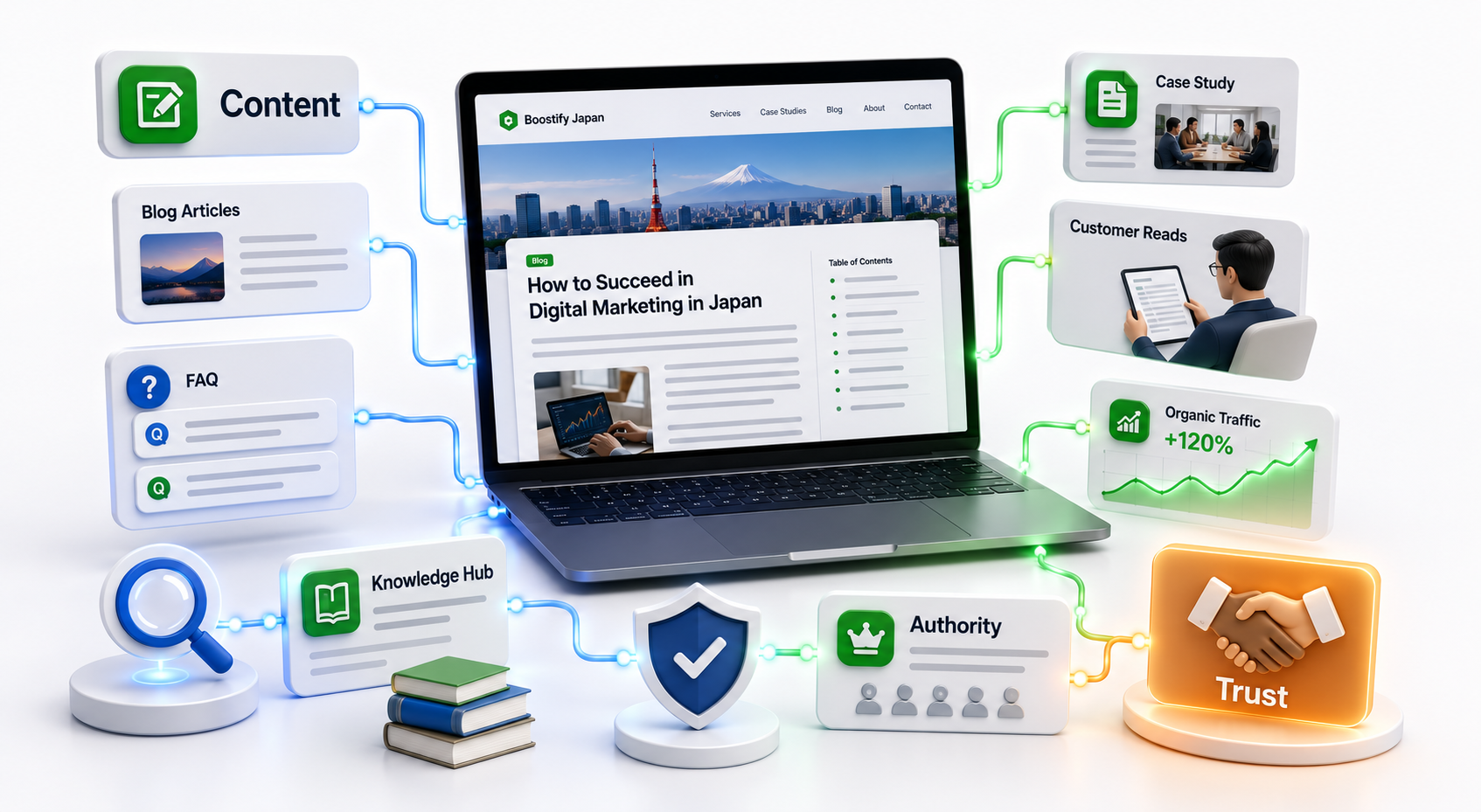
Winning new business in Japan is rarely the result of a single advertisement or sales meeting. Before contacting a potential supplier, Japanese decision makers typically invest significant time researching the company, evaluating its expertise, and comparing it with other providers. Understanding this buying behaviour is essential for foreign businesses looking to build credibility and generate qualified leads.
Unlike markets where purchasing decisions may happen quickly, Japanese B2B buyers often follow a structured evaluation process designed to reduce risk. Multiple stakeholders may be involved, including department managers, technical specialists, procurement teams, executives, and financial decision makers. Each person reviews your business from a different perspective, making your digital presence one of your most valuable assets.
The research process usually begins with a Google search. Even if a prospect discovers your company through a referral, trade show, or LinkedIn, they will almost always search for your business online before making contact. Your website becomes the first place they look for evidence that your company is experienced, trustworthy, and capable of delivering long term value.
From there, buyers often explore several areas of your online presence. They review your service pages, read educational blog articles, examine case studies, check client testimonials, and compare your business with competing companies. They want to understand not only what you offer but also how you think, how you solve problems, and whether your expertise aligns with their own business goals.
Trust signals play a significant role throughout this journey. A professional website, informative content, clear company information, consistent branding, positive customer reviews, and a regularly updated online presence all contribute to building confidence. Every interaction reinforces the impression that your business is reliable and prepared to support clients over the long term.
This is why content marketing, SEO, Google Ads, and website design should never be viewed as separate marketing activities. Together, they create a complete buying experience that answers questions before prospects even ask them. By the time a potential customer schedules a meeting, they have often already formed an opinion about your business based on everything they discovered online.
For foreign companies entering Japan, the goal is not simply to generate traffic. It is to become the company that buyers trust most during their research process. Businesses that consistently educate, demonstrate expertise, and provide genuine value are far more likely to move from being one option among many to becoming the preferred partner.
Want to learn how successful businesses earn trust before the first conversation? Read our complete guide to How to Build Trust with Japanese B2B Buyers and discover the trust signals that influence purchasing decisions in Japan.

Creating content is one of the most effective ways to increase your online visibility, but in Japan, successful content serves a purpose beyond attracting website traffic. It helps establish credibility, demonstrate expertise, and reduce uncertainty before a potential customer ever contacts your business.
Japanese buyers rarely make important purchasing decisions based on advertising alone. Instead, they often spend time learning about a company through its website, blog articles, case studies, and educational resources. Every piece of content becomes an opportunity to answer questions, showcase knowledge, and reassure prospects that your business understands their challenges.
This is especially important for foreign companies entering the Japanese market. Even if your business has an excellent reputation internationally, Japanese decision makers may have little or no familiarity with your brand. Publishing valuable, well researched content allows you to introduce your expertise in a way that feels informative rather than promotional.
The most effective content addresses real customer questions instead of simply describing your services. Practical guides, industry insights, frequently asked questions, case studies, market analysis, and educational articles all help visitors understand how your business solves problems. This approach naturally builds confidence while supporting your search engine optimization strategy.
Consistency also matters. Businesses that publish helpful content on a regular basis gradually strengthen their topical authority, making it easier for both users and search engines to recognise them as trusted sources of information. Over time, this consistent effort contributes to stronger organic visibility, increased brand awareness, and higher quality enquiries.
Quality should always take priority over quantity. Publishing one comprehensive article that genuinely helps your audience is far more valuable than producing several short articles with little practical insight. Well structured content supported by original illustrations, clear explanations, and relevant internal links creates a better experience for readers while encouraging them to explore more of your website.
Content should never exist in isolation. Each article should naturally connect with related topics, creating a network of resources that guides visitors through different stages of their buying journey. This interconnected approach not only improves user experience but also strengthens your overall SEO strategy by helping search engines understand the relationship between your content.
Ultimately, the goal of content marketing in Japan is not simply to generate more page views. It is to become the company that potential customers trust before they are ready to make a purchasing decision. Businesses that consistently educate rather than simply advertise are often the ones that build the strongest long term relationships.
Want to create content that attracts qualified leads and builds authority? Read our complete guide to Content Marketing in Japan for Foreign Businesses.
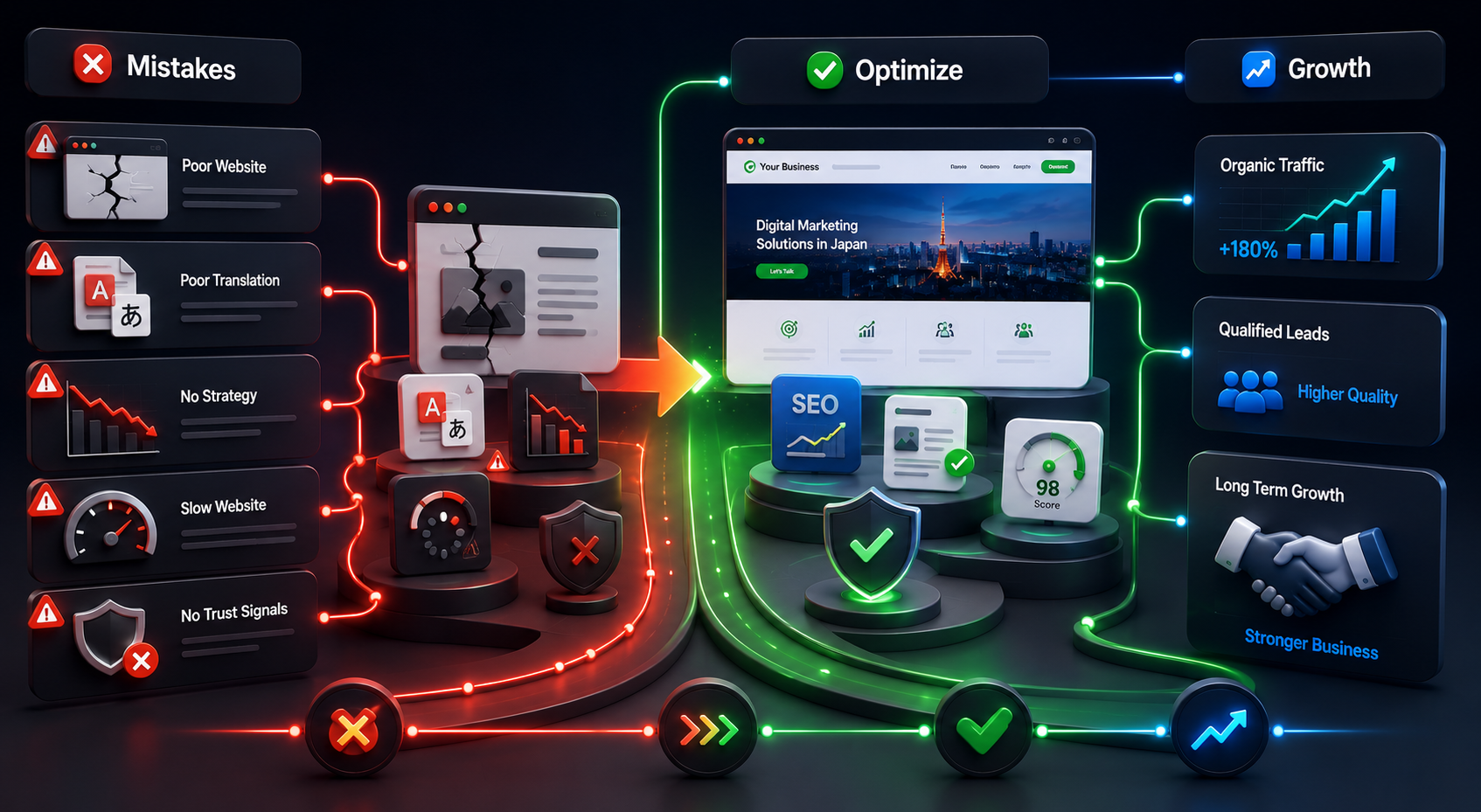
Expanding into Japan presents significant opportunities, but many foreign businesses struggle to generate consistent results because they apply the same digital marketing strategies that worked in other countries without adapting them to the Japanese market. While the fundamentals of marketing remain the same, customer expectations, buying behaviour, and online research habits often require a different approach.
One of the most common mistakes is relying solely on direct translation. Translating an English website into Japanese does not automatically create a localized experience. Visitors expect content that feels natural, addresses local concerns, and reflects an understanding of Japanese business culture. Effective localization considers language, user experience, messaging, and the expectations of your target audience.
Another frequent mistake is focusing only on paid advertising while neglecting long term visibility. Google Ads can generate immediate traffic, but without strong organic content, search engine optimization, and a professional website, businesses often struggle to build lasting authority. Sustainable growth comes from combining multiple digital marketing channels rather than depending on a single tactic.
Many companies also underestimate the importance of trust. Japanese customers and B2B buyers usually spend considerable time researching suppliers before making contact. If your website lacks educational content, customer success stories, company information, or clear trust signals, potential clients may continue their search elsewhere, even if your products or services are highly competitive.
Publishing inconsistent or low quality content is another common challenge. Some businesses create several blog articles in a short period and then stop publishing altogether. Others produce content focused only on search engines instead of providing genuine value to readers. Consistency and quality are far more effective than simply increasing the number of articles on your website.
Ignoring technical website performance can also limit your results. Slow loading pages, poor mobile usability, confusing navigation, and outdated website design negatively affect both user experience and search engine rankings. Even the strongest marketing campaigns will struggle to convert visitors if the website itself creates unnecessary friction.
Finally, many businesses expect immediate results. Digital marketing in Japan should be viewed as a long term investment rather than a one time campaign. Building authority, earning trust, improving organic visibility, and developing customer relationships all require consistent effort over time. Companies that remain patient and continuously improve their digital presence are often the ones that achieve sustainable growth.
Avoiding these common mistakes allows your marketing channels to work together more effectively, helping you build stronger credibility, attract qualified leads, and create a foundation for long term success in the Japanese market.
Want to avoid costly marketing mistakes when expanding into Japan? Read our complete guide to Why Most Foreign Businesses Fail in Japan and How to Avoid It.
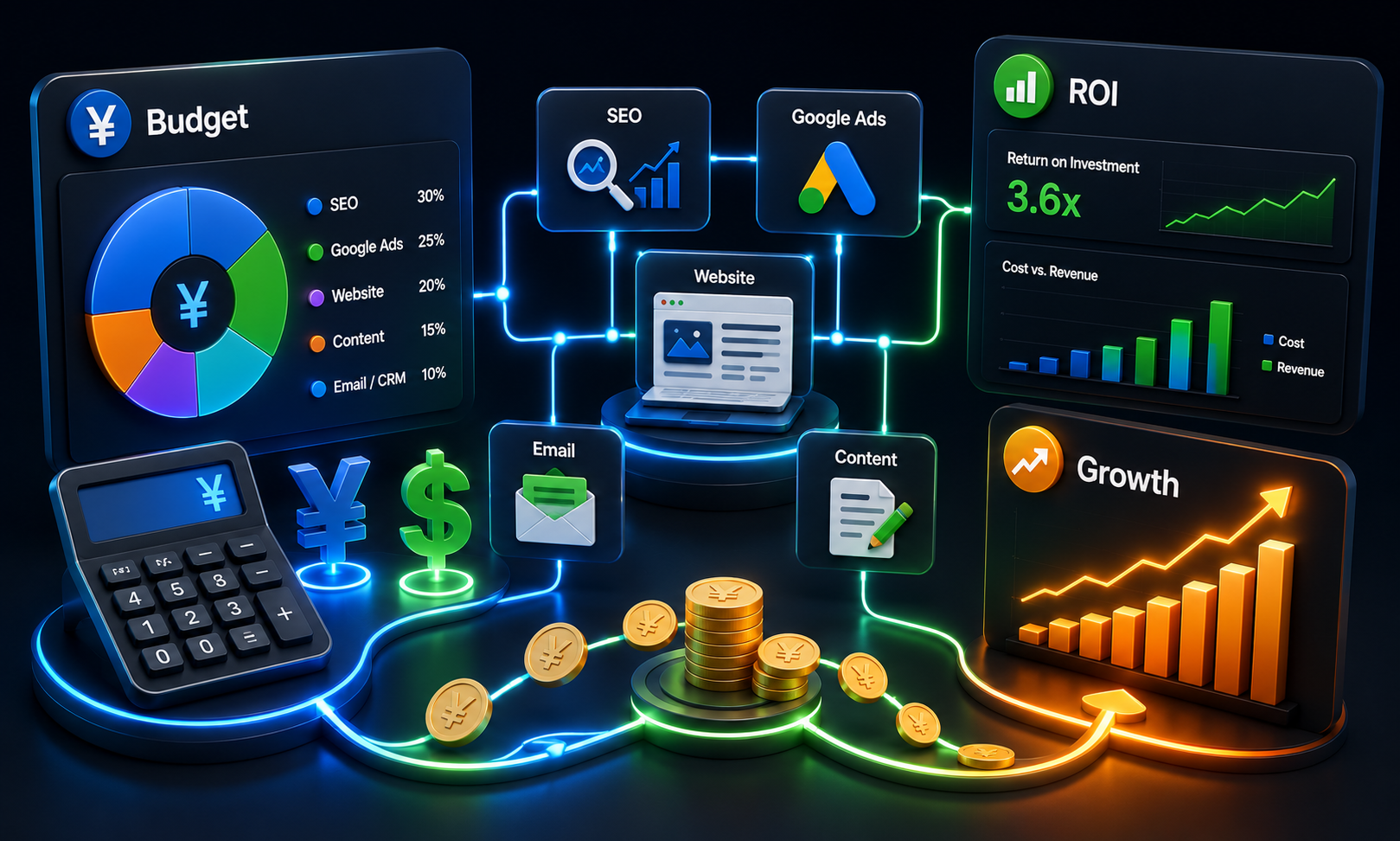
One of the first questions businesses ask when planning to expand into Japan is how much digital marketing will cost. While there is no universal answer, understanding how pricing is typically structured can help you set realistic expectations and choose the right strategy for your business goals.
Digital marketing costs in Japan vary depending on several factors, including your industry, target audience, level of competition, business objectives, and the services you require. A company investing in long term search engine optimization will have different budget requirements than a business focused primarily on paid advertising or website development. Rather than thinking in terms of a single monthly expense, it is often more helpful to view digital marketing as a combination of complementary activities working toward sustainable growth.
SEO is generally considered a long term investment because results develop gradually as your website gains authority and visibility in search engines. Businesses targeting competitive keywords often invest consistently over several months while publishing high quality content, improving technical performance, and strengthening their overall online presence.
Google Ads, on the other hand, can generate visibility much more quickly. Your advertising budget depends on factors such as keyword competition, audience targeting, campaign objectives, and ongoing optimization. Businesses typically balance paid advertising with organic marketing to achieve both immediate and long term growth.
Website design and localization should also be viewed as an investment rather than a one time expense. A professionally designed website that reflects Japanese user expectations can improve trust, increase conversion rates, and support every other marketing channel. Since your website often serves as the first impression for potential customers, investing in a strong user experience can deliver long term value.
Content marketing, email marketing, Local SEO, and Google Business Profile optimization each contribute to the overall success of your strategy. Instead of treating these services as separate purchases, successful businesses integrate them into a unified marketing plan where every channel supports the others.
The most effective digital marketing strategy is not necessarily the one with the largest budget. It is the strategy that aligns your investment with clear business objectives, focuses on measurable results, and adapts continuously as your business grows. Understanding your priorities before investing makes it easier to allocate resources where they will have the greatest impact.
Rather than asking, "What is the cheapest option?" businesses entering Japan often achieve better results by asking, "Which marketing activities will generate the strongest long term return for our business?"
Want to understand which marketing channels provide the best return on investment? Read our complete guide to Digital Marketing Costs in Japan for Foreign Businesses.
Selecting the right digital marketing agency is one of the most important decisions you'll make when expanding your business into Japan. While many agencies offer services such as SEO, Google Ads, website design, and social media marketing, the quality of strategy, communication, and execution can vary significantly. Rather than choosing an agency based only on price, look for a long term partner that understands both digital marketing and the Japanese business landscape.
Start by evaluating the agency's experience within the Japanese market. An agency that understands local search behaviour, customer expectations, and purchasing habits can create strategies that are far more effective than simply applying techniques that work in other countries. Whether your goal is attracting B2B clients, increasing local visibility, or building brand awareness, market knowledge is a valuable advantage.
Next, review the agency's own online presence. A company specialising in digital marketing should demonstrate its expertise through its own website. Look for educational blog content, detailed service pages, case studies, and evidence of real industry knowledge. Agencies that consistently publish high quality content are often better positioned to develop effective content strategies for their clients.
Transparency is another essential factor. A reliable agency should clearly explain its process, provide realistic expectations, and focus on measurable business outcomes rather than making unrealistic promises. Sustainable growth comes from continuous optimisation, data driven decisions, and long term planning rather than quick fixes or guaranteed rankings.
Communication also plays a key role, especially for international businesses entering Japan. Working with an agency that understands both English and Japanese business environments can make collaboration smoother and help prevent misunderstandings throughout your marketing campaigns.
It's also worth considering whether the agency offers a complete range of digital marketing services. SEO, Google Ads, website design, content marketing, Local SEO, Google Business Profile optimisation, and email marketing all perform better when they are developed as part of one integrated strategy. Instead of managing multiple vendors, many businesses benefit from working with one partner that can align every marketing channel toward the same business goals.
At Boostify, we specialise in helping foreign businesses establish and grow their presence in Japan. Rather than offering one size fits all marketing packages, we focus on building tailored strategies based on your industry, target audience, and long term objectives. Our approach combines SEO, Google Ads, website design, content marketing, and localisation to help businesses build credibility, generate qualified leads, and achieve sustainable growth in the Japanese market.
Ultimately, choosing the right digital marketing agency is about more than outsourcing your marketing. It's about building a partnership with a team that understands your vision, communicates transparently, and is committed to helping your business succeed in Japan for the long term.
Looking for a trusted digital marketing partner in Japan? Explore our guide How to Choose the Right Digital Marketing Agency in Japan

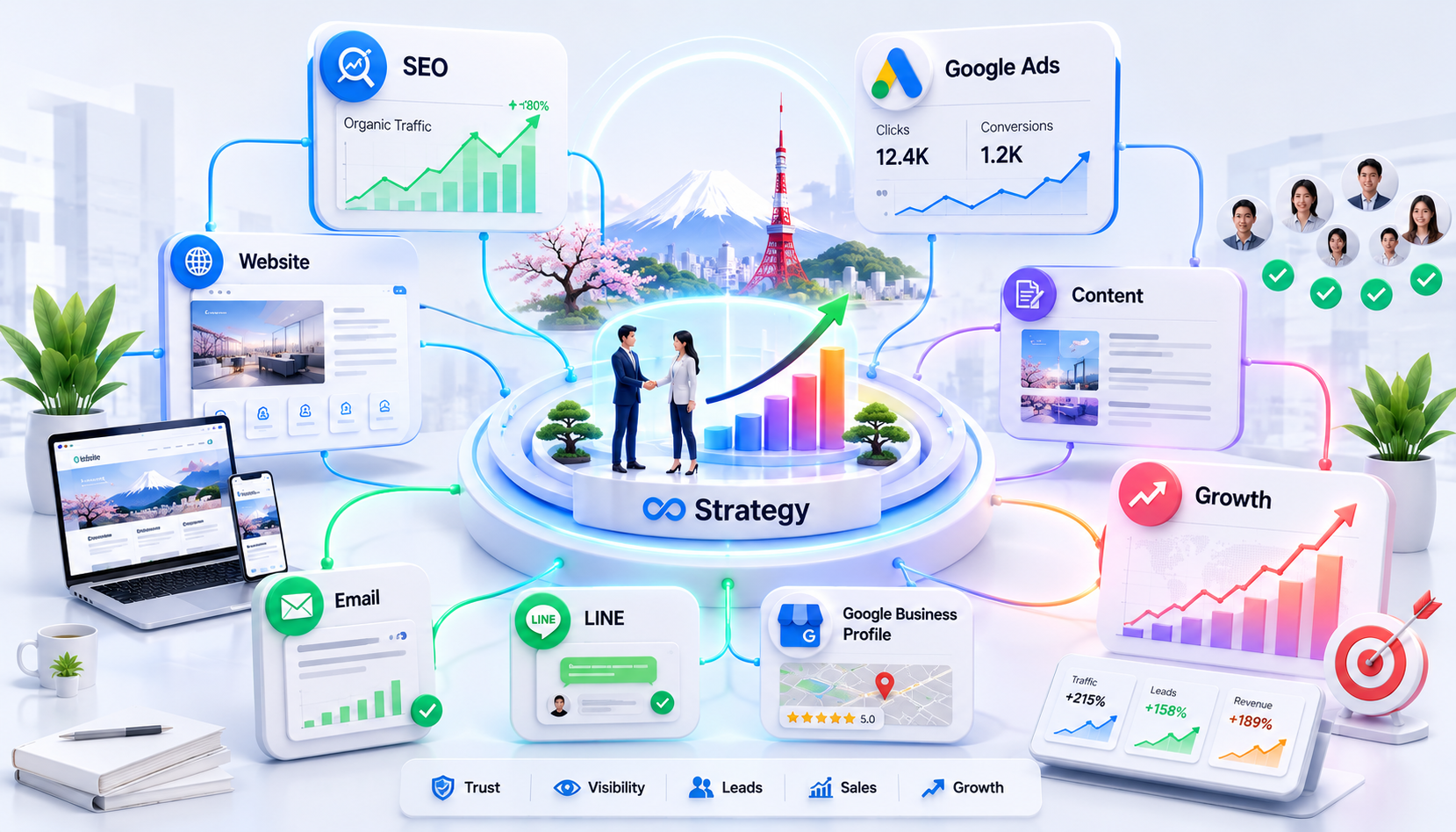
Successful digital marketing in Japan is not about finding one tactic that delivers immediate results. It is about building a complete marketing ecosystem where every channel works together to attract visitors, build trust, generate enquiries, and support long term business growth. Companies that view SEO, advertising, website design, and content marketing as separate activities often miss opportunities to create a stronger customer journey.
A sustainable strategy usually begins with a solid foundation. Your website should clearly communicate who you are, what problems you solve, and why businesses should trust you. Every visitor, whether they arrive through Google Search, paid advertising, social media, or a referral, should experience the same professional branding, clear messaging, and simple path toward contacting your business.
From there, search engine optimization helps increase your long term visibility by making it easier for potential customers to discover your content organically. Google Ads can complement this by generating immediate traffic while your organic presence continues to grow. Together, these channels ensure your business remains visible throughout different stages of the customer journey.
Content marketing plays an equally important role. Educational blog articles, industry insights, case studies, and practical resources help answer questions before prospects ask them. Instead of simply promoting your services, valuable content demonstrates expertise and gradually builds credibility with both search engines and potential customers.
As visitors continue interacting with your business, channels such as email marketing, LINE Official Account, and Google Business Profile help strengthen those relationships. Consistent communication, helpful updates, and positive customer experiences encourage prospects to return, engage further, and eventually become long term clients.
Perhaps the most important characteristic of a successful strategy is continuous improvement. Digital marketing is never truly finished. Search algorithms evolve, customer behaviour changes, and competitors continue investing in their online presence. Businesses that regularly analyse performance, publish new content, refine campaigns, and optimise their websites consistently outperform those that treat marketing as a one time project.
Rather than chasing quick wins, the businesses that achieve lasting success in Japan focus on building authority, earning trust, and creating a digital presence that grows stronger over time. Every improvement compounds on the last, making future marketing efforts more effective and more cost efficient.
At Boostify, this long term approach shapes everything we do. We help foreign businesses combine SEO, Google Ads, website design, content marketing, Local SEO, and marketing strategy into one integrated system that supports sustainable growth in Japan. Instead of focusing on individual marketing channels, we focus on helping businesses build a digital foundation that continues generating opportunities well into the future.
Ready to build a long term digital marketing strategy for Japan? Explore our digital marketing services or book a free consultation with Boostify to discuss your business goals.
Yes. Digital marketing allows foreign businesses to build visibility, establish credibility, and generate qualified leads before investing heavily in offline sales activities. A well planned strategy helps businesses reach both Japanese customers and international companies operating in Japan.
Yes. Google holds the majority of the search engine market in Japan, making SEO and Google Ads two of the most effective channels for reaching potential customers. Optimizing your website for Google should be a priority for most businesses entering the Japanese market.
Learn more: SEO service in jaoan
Not necessarily. Translation alone is rarely enough. Successful localization considers language, design, navigation, cultural expectations, and user experience. In many cases, businesses targeting international companies in Japan can also achieve excellent results with a well structured English website designed specifically for that audience.
Learn more: Explore our website service
SEO is a long term investment. While timelines vary depending on competition and your website's current authority, many businesses begin seeing meaningful improvements within several months. Consistent content creation, technical optimization, and quality backlinks contribute to sustainable growth over time.
Learn more: SEO in Japan for Foreign Businesses
Neither is universally better. Google Ads can generate immediate visibility, while SEO builds long term organic traffic and authority. Many successful businesses combine both strategies to create consistent lead generation.
Learn more: Google Ads in Japan
Yes. Email marketing remains an effective way to nurture leads, strengthen customer relationships, and encourage repeat business. When combined with automation and valuable content, email continues to deliver strong long term results.
Learn more: Email Marketing in Japan
Absolutely. LINE is one of Japan's most widely used communication platforms. Businesses use LINE Official Accounts to share updates, promotions, customer support, appointment reminders, and exclusive offers, making it an important channel for customer engagement.
Learn more: LINE Marketing in Japan
Budgets vary depending on your industry, objectives, competition, and marketing channels. Rather than focusing on the lowest cost, businesses should invest in a strategy that aligns with their long term growth goals and provides measurable returns.
Learn more: Digital Marketing Costs in Japan
The best choice is an agency that understands both digital marketing and the Japanese market. Experience with localization, Japanese customer behaviour, and international business communication can make a significant difference to your results.
Learn more: How to Choose a Digital Marketing Agency in Japan
Boostify helps foreign businesses build sustainable growth through SEO, Google Ads, website design, Local SEO, content marketing, email marketing, and digital strategy. Our focus is on creating integrated marketing systems that generate long term visibility, qualified leads, and measurable business growth in the Japanese market.
Explore our Digital Marketing Services
Expanding into Japan offers incredible opportunities, but success rarely happens by chance. Building a strong digital presence requires more than simply launching a website or running advertising campaigns. It takes a strategy that combines search engine optimization, Google Ads, website localization, content marketing, Local SEO, email marketing, and customer trust into one connected system.
Throughout this guide, we've explored how Japanese customers research businesses, why trust plays such an important role in the buying journey, and how each digital marketing channel contributes to long term business growth. Rather than relying on short term tactics, the companies that succeed in Japan are those that invest consistently in building authority, educating their audience, and creating exceptional online experiences.
Whether you're launching your business in Japan for the first time or looking to improve your existing digital marketing strategy, taking the right approach today can create lasting results for years to come. Every article in this guide is designed to help you better understand the Japanese market and make informed decisions that support sustainable growth.
At Boostify, we help foreign businesses build a strong digital presence in Japan through SEO, Google Ads, website design, Local SEO, content marketing, email marketing, and digital strategy. Our goal isn't simply to increase website traffic—it's to help you attract qualified leads, build trust with your target audience, and create long term business growth.
If you're ready to strengthen your digital marketing strategy in Japan, we'd love to learn more about your business and discuss how we can help.
Whether you need help increasing your visibility on Google, generating more qualified leads, redesigning your website, or creating a complete digital marketing strategy for Japan, our team is here to help.
Digital marketing in Japan isn't about chasing algorithms or quick wins it's about earning trust, providing value, and building a digital presence that continues to grow over time.
Businesses that educate their audience, invest in quality content, and create exceptional online experiences are the ones that stand out in one of the world's most competitive markets.
We hope this guide has given you a clearer understanding of how digital marketing works in Japan and provided practical insights you can apply to your own business.
When you're ready to take the next step, Boostify is here to help.