

Growth
How to Build Trust with Japanese B2B Buyers | Boostify
Learn how foreign businesses can build trust with Japanese B2B buyers and win more long term business relationships.

Boostify
July 17, 2026
Imagine you're responsible for choosing a new supplier for your company.
After weeks of research, you've narrowed your options down to two businesses.
Both offer similar services.
Both have competitive pricing.
Both claim they can deliver excellent results.
On paper, they seem almost identical.
Curious to learn more, you search for both companies online.
The first business has a professional website that clearly explains its services. It publishes helpful industry articles, showcases detailed case studies, displays genuine client testimonials, introduces the team behind the company, and provides clear contact information. Every page gives you confidence that this is a business with experience, expertise, and a genuine commitment to helping its clients succeed.
The second company tells a very different story.
Its website looks outdated. Service descriptions are vague. There are no customer reviews, no case studies, and almost no information about the people behind the business. While the company may be just as capable, there's very little evidence to support that claim.
Which company would you feel more comfortable working with?
For most people, the answer is obvious.
Now imagine that your decision could affect an entire department, a major investment, or your company's long-term growth.
Suddenly, trust becomes far more important than price alone.
This is exactly how many Japanese B2B buyers approach purchasing decisions.
Contrary to what many foreign businesses expect, trust in Japan is rarely built during the first sales meeting or through a persuasive presentation. By the time that meeting takes place, buyers have often already formed strong opinions based on everything they've discovered online.
They've visited your website.
Read your blog articles.
Compared your business with competitors.
Reviewed your company's background.
Examined customer feedback.
Evaluated whether your business appears reliable enough to become a long-term partner.
Every digital interaction contributes to a single question that influences the entire buying process:
"Can we trust this company?"
For foreign businesses entering Japan, understanding this question is one of the biggest competitive advantages you can have.
Many companies focus heavily on generating more website traffic, running advertising campaigns, or improving search rankings. While those efforts are important, they only solve part of the challenge.
Visibility gets you discovered.
Trust gets you chosen.
Without credibility, even the strongest marketing campaign struggles to convert visitors into customers.
The businesses that consistently win new clients in Japan understand this difference. They don't simply market their services they create an online presence that reduces uncertainty, demonstrates expertise, and gives potential customers confidence before the first conversation ever begins.
In this article, we'll explore why trust plays such an important role in Japanese B2B purchasing decisions, what buyers look for when evaluating potential suppliers, and the practical steps foreign businesses can take to build lasting credibility in one of the world's most relationship-driven markets.
Many businesses approach marketing with one primary goal:
Generate more leads.
While there's nothing wrong with that objective, it often overlooks something much more important—especially in Japan.
People rarely buy from businesses they don't trust.
This becomes even more significant in the B2B world, where purchasing decisions often involve substantial budgets, long-term contracts, and multiple stakeholders. Choosing the wrong supplier doesn't simply result in financial loss. It can delay projects, damage internal relationships, affect customer satisfaction, and create unnecessary risk for everyone involved.
Because of this, Japanese companies typically spend considerable time reducing uncertainty before making a decision.
Rather than asking,
"Which company offers the cheapest solution?"
they're more likely to ask,
"Which company gives us the greatest confidence?"
That shift in thinking changes everything.
Price remains important.
Features matter.
Experience matters.
But trust often becomes the deciding factor when businesses offer similar solutions.
This emphasis on trust is closely connected to Japan's long-standing business culture.
Many companies value stability over rapid change. Instead of frequently switching suppliers, they prefer building long-term partnerships with businesses that consistently demonstrate reliability, professionalism, and integrity. Once trust has been established, those relationships often continue for many years.
For foreign businesses, this creates both a challenge and an opportunity.
The challenge is that trust cannot be demanded.
It has to be earned.
The opportunity is that once you've established credibility, you're often competing on far more than price alone.
Customers who trust your expertise are more likely to value your recommendations, remain loyal during difficult periods, and recommend your business to others.
This is why successful companies invest in far more than advertising.
They invest in their reputation.
Every helpful article they publish.
Every successful project they complete.
Every customer review they receive.
Every interaction with a potential client contributes to building confidence.
Trust doesn't appear overnight.
It's accumulated gradually through dozens of positive experiences that consistently reinforce the same message:
"This is a company we can rely on."
Businesses that understand this approach rarely view marketing as simply promoting products or services.
Instead, they see every digital interaction as another opportunity to strengthen credibility.
Over time, this mindset creates something far more valuable than a one-time sale.
It creates relationships built on confidence rather than convenience.
And in Japan, those relationships often become one of a company's greatest competitive advantages.
Imagine recommending a new supplier to your management team.
After months of planning, your company signs a contract.
A few weeks later, deadlines begin slipping.
Communication becomes inconsistent.
The quality isn't what was promised.
Suddenly, the responsibility for choosing that supplier doesn't just affect the project—it affects your own professional reputation.
This is one of the biggest reasons Japanese B2B buyers approach purchasing decisions so carefully.
When companies choose a new business partner, they aren't simply buying a service.
They're accepting a level of responsibility.
If the partnership succeeds, everyone benefits.
If it fails, the consequences can extend far beyond financial loss.
Projects may be delayed.
Customers may become dissatisfied.
Internal teams may lose confidence in future recommendations.
Because the stakes are often high, Japanese businesses naturally prioritize reducing risk before making important decisions.
This is why purchasing decisions frequently involve multiple stakeholders rather than a single decision maker.
Marketing teams evaluate communication.
Technical specialists assess expertise.
Procurement departments compare suppliers.
Executives consider long-term business impact.
Finance teams review budgets and overall value.
Each stakeholder approaches the decision from a different perspective, yet they're all working toward the same goal:
Making the safest possible decision.
For foreign businesses, this behaviour can sometimes feel frustrating.
You may wonder why prospects continue asking questions even after you've explained your services.
Why they request additional information.
Why they spend weeks researching before scheduling a meeting.
The answer isn't that they're uninterested.
Quite the opposite.
Careful research often indicates that your business is being seriously considered.
Japanese companies generally prefer making informed decisions rather than rushed ones.
They gather information independently, compare alternatives, and verify claims before moving forward.
By the time they contact your business, they're often looking for confirmation—not persuasion.
Understanding this mindset changes the way you approach marketing.
Instead of focusing solely on generating quick enquiries, you begin creating content and experiences that reduce uncertainty throughout the buying process.
Every helpful article.
Every case study.
Every customer testimonial.
Every detailed service page.
Each one removes another obstacle standing between interest and confidence.
Businesses that consistently reduce perceived risk don't simply become easier to trust.
They become easier to choose.
Many business owners believe the first impression happens during a meeting, a sales presentation, or a phone call.
In reality, that first impression is usually created much earlier.
Long before a potential customer introduces themselves, they've already started forming opinions about your business.
Today, the buying journey almost always begins online.
A prospect may discover your company through a Google search, receive a recommendation from a colleague, find one of your LinkedIn posts, or come across your business at an industry event.
Regardless of how they first hear about you, one action usually follows almost immediately:
They search for your company online.
Within minutes, they're evaluating far more than your services.
They notice the quality of your website.
They read your company information.
They explore your blog.
They examine your Google Business Profile.
They compare your business with competitors.
They look for reviews, testimonials, and evidence that other companies have trusted you before.
These individual actions may seem unrelated.
From the buyer's perspective, however, they're all part of the same process.
They're building an overall impression of your business.
This is why your digital presence has become one of your most valuable business assets.
A professional website immediately communicates competence.
Helpful educational content demonstrates expertise.
Clear company information creates transparency.
An active Google Business Profile reinforces legitimacy.
Consistent branding across every platform creates familiarity.
Together, these elements answer an important question before the buyer ever asks it aloud:
"Does this company look like a business we can trust?"
Every positive interaction strengthens confidence.
Every inconsistency introduces doubt.
A broken page.
Outdated information.
Poor translations.
An abandoned blog.
Missing contact details.
Individually, these issues may seem minor.
Collectively, they influence how buyers perceive your business.
This is especially true for foreign companies entering Japan.
Potential customers aren't simply evaluating your services.
They're evaluating whether your business understands the market, communicates professionally, and appears committed to serving clients over the long term.
The strongest businesses recognize that every digital touchpoint contributes to the same objective.
Not generating clicks.
Not increasing impressions.
Building confidence.
Because by the time a Japanese B2B buyer sends their first enquiry, the conversation has often already started.
It's simply been happening through your digital presence rather than face-to-face.
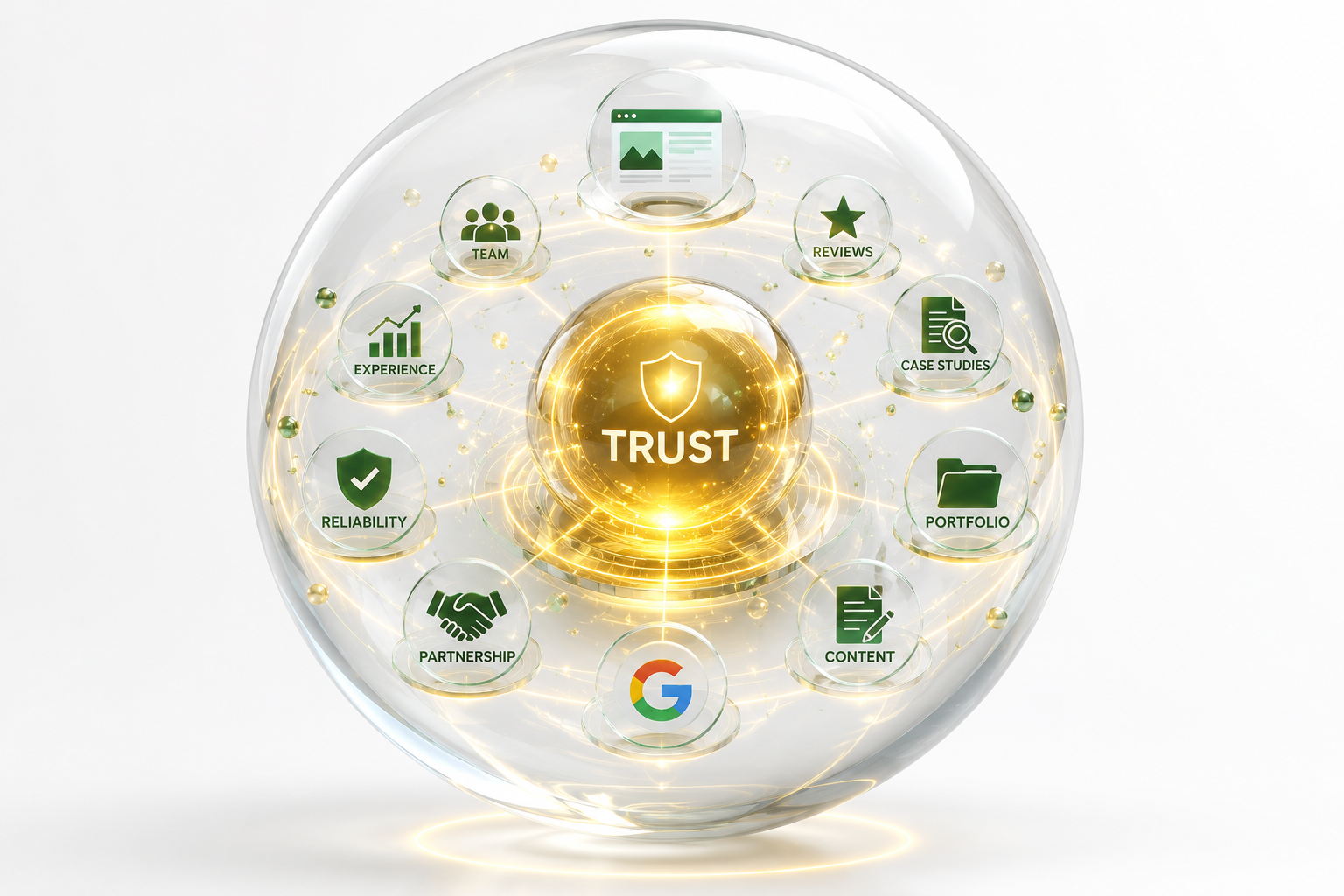
Trust is rarely built through a single interaction. Instead, it develops through dozens of small signals that work together to create confidence in your business. Every page a potential customer visits, every article they read, and every piece of information they discover contributes to the overall impression they form before contacting you.
This is particularly important in Japan, where buyers often spend considerable time evaluating suppliers before making a decision. Rather than relying on promises made during a sales meeting, they look for evidence that supports those promises. They want reassurance that your company is experienced, reliable, and capable of delivering consistent results.
One of the strongest trust signals is a professional website.
Your website often becomes the digital headquarters of your business. It should clearly explain what you do, who you help, and why your company is qualified to solve a customer's problem. Visitors shouldn't have to search through multiple pages to understand your services or wonder whether your business is legitimate. Clear messaging, intuitive navigation, and a modern design immediately create a stronger first impression.
Case studies are another powerful trust builder because they transform claims into evidence. Saying that your company delivers excellent results is one thing. Showing how you've helped another business overcome a similar challenge is far more convincing. Buyers naturally feel more confident when they can see real examples of successful projects rather than simply reading marketing copy.
Customer testimonials and reviews play a similar role. They provide independent validation from people who have already worked with your business. While testimonials on your website are valuable, positive reviews on platforms such as Google Business Profile often carry additional credibility because they come from an external source. Together, these forms of social proof reassure potential customers that other businesses have trusted your company and had positive experiences.
Transparency also has a significant influence on trust. Buyers want to know who they're working with. An informative About page, details about your team, your company history, office location, and clear contact information all make your business feel more authentic. Even simple elements such as using a professional business email address, displaying accurate company information, and keeping your website updated demonstrate that your business is active and well managed.
Another factor that many companies underestimate is consistency. Buyers often move between your website, LinkedIn page, Google Business Profile, and other online platforms while researching your business. When branding, messaging, and company information remain consistent across every touchpoint, confidence grows naturally. Inconsistent logos, outdated information, or conflicting descriptions create unnecessary doubt, even if your services are excellent.
Ultimately, trust isn't built because one particular element is perfect. It's built because every part of your digital presence supports the same message. The more consistently your business demonstrates professionalism, expertise, and reliability, the easier it becomes for buyers to feel confident choosing you over competing suppliers.
Many businesses believe their service pages are the most important part of their website.
In reality, educational content often has a much greater impact on trust.
A service page tells potential customers what you offer. A high-quality article demonstrates how you think, how you solve problems, and whether your expertise is genuine. That's why businesses that consistently publish valuable content often build stronger credibility than companies that rely entirely on sales-focused messaging.
Consider two digital marketing agencies.
The first has a website filled with promotional claims about being the best, fastest, or most experienced. The second publishes in-depth articles explaining SEO in Japan, Google Ads strategies, Local SEO, customer behaviour, and practical solutions to common marketing challenges.
Both agencies offer similar services.
Which one appears more knowledgeable?
Most buyers naturally trust the company that teaches them something before asking for their business.
Educational content changes the relationship between your business and your audience. Instead of immediately trying to sell a service, you're helping potential customers make better decisions. That shift creates goodwill and positions your company as a trusted source of information rather than simply another supplier competing for attention.
This approach is especially valuable in Japan, where buyers often spend weeks or even months researching before making contact. Every helpful article gives them another reason to return to your website, learn more about your expertise, and become increasingly familiar with your brand. By the time they reach out, they've often developed confidence in your knowledge long before speaking with your team.
Content also strengthens every other part of your digital marketing strategy. Well-written articles improve your visibility in search engines, answer questions customers are actively searching for, and provide valuable resources that can be shared through social media, email campaigns, or LinkedIn. Instead of relying on one entry point into your business, educational content creates multiple opportunities for potential customers to discover you naturally.
This is one of the reasons content marketing has become such an important part of modern B2B marketing. Businesses that consistently educate their audience don't simply attract more traffic. They build authority, strengthen trust, and create a competitive advantage that's difficult for others to replicate.
If you'd like to learn more about how content, SEO, websites, and paid advertising work together throughout the buying process, explore our complete guide to Digital Marketing in Japan: Everything Foreign Businesses Need to Know.(Internal Link)
Many foreign businesses enter the Japanese market with excellent products, experienced teams, and proven success in other countries. Yet despite offering high quality services, they often struggle to generate enquiries or establish long term business relationships.
The problem is rarely the quality of their work.
More often, it's because they underestimate how trust is built in the Japanese market.
One of the biggest mistakes is assuming that translation is the same as localization. Simply converting an English website into Japanese doesn't automatically create a trustworthy experience. Japanese buyers expect communication that feels natural, culturally appropriate, and written specifically for them. Poor translations, awkward phrasing, or content that clearly feels machine translated can quickly reduce confidence, even if the underlying service is excellent.
Another common challenge is the lack of local credibility.
Imagine you're comparing two companies offering the same service. One has Japanese client testimonials, local case studies, a verified Google Business Profile, and content that demonstrates an understanding of the Japanese market. The other only showcases overseas projects with no evidence of local experience.
Which company would you trust more?
For many buyers, the answer is obvious.
Businesses don't necessarily need hundreds of Japanese clients to establish credibility, but they do need to demonstrate that they understand the market they're serving. Even a few local success stories, customer testimonials, or examples of work completed in Japan can significantly strengthen buyer confidence.
Foreign businesses also tend to focus heavily on explaining what they do rather than why they're the right partner.
Japanese buyers are often looking beyond technical ability. They want reassurance that your business communicates clearly, responds professionally, understands local expectations, and is committed to building a long term relationship rather than simply completing a single project.
This is why every aspect of your digital presence matters. Your website, blog articles, company information, customer reviews, and overall brand consistency all help answer questions buyers may never ask directly.
Do they understand our market?
Will communication be smooth?
Can we rely on them over the long term?
The businesses that answer these questions before the first conversation have already built an important competitive advantage.
Rather than trying to convince buyers during a sales meeting, they arrive at that meeting with trust already established.
Trust isn't always built through major achievements or impressive case studies.
Often, it's the smallest details that influence how people perceive your business.
Most visitors won't consciously notice a fast loading website, clear navigation, or a professional email address.
They simply experience a business that feels organised, reliable, and easy to work with.
The opposite is also true.
A slow website, broken links, outdated information, or inconsistent branding may seem like minor issues individually, but together they create friction. Every small inconvenience gives potential customers another reason to question whether your business pays attention to detail.
Website speed is one example.
People naturally associate fast, responsive websites with professionalism. If pages load slowly or important information is difficult to find, visitors often leave before exploring your services in greater detail.
Mobile experience is equally important.
Many decision makers begin researching businesses on their phones before returning later on a desktop computer. A website that performs poorly on mobile devices immediately creates a weaker first impression.
Clear communication also contributes to credibility.
Simple navigation, well organised service pages, accurate contact information, and straightforward calls to action make it easier for visitors to understand your business without unnecessary confusion.
Even your response time matters.
Prompt replies to enquiries demonstrate professionalism and respect for your customers' time. Delayed responses can unintentionally suggest disorganisation or a lack of commitment.
Another frequently overlooked factor is consistency.
Your logo, colours, messaging, company description, and contact details should remain consistent across your website, Google Business Profile, LinkedIn page, and every other platform where your business appears.
Consistency creates familiarity.
Familiarity builds confidence.
And confidence is one of the strongest foundations of trust.
These details may seem small when viewed individually.
Together, they shape how customers feel about your business before they ever speak with you.
Every interaction either strengthens confidence or introduces doubt.
Businesses that consistently earn trust understand that credibility isn't created by one impressive feature. It's built through dozens of positive experiences that reinforce the same message over time.
The comparison below highlights how small differences can significantly influence buyer perception.
Trust BuildersTrust BreakersProfessional, modern websiteOutdated or poorly designed websiteHelpful educational contentThin or generic marketing copyReal customer testimonialsNo evidence of previous workDetailed case studiesVague claims without proofFast loading pagesSlow, unresponsive websiteConsistent brandingMixed messaging across platformsProfessional team informationAnonymous company with little backgroundClear contact informationDifficult to contact or incomplete detailsUpdated company informationOutdated content and broken linksLocalized communicationPoor translations and generic messaging
No business is perfect.
However, companies that consistently strengthen the trust builders while eliminating trust breakers create a much stronger first impression and significantly reduce uncertainty for potential customers.
Trust grows when buyers repeatedly see evidence that your business is reliable, transparent, and committed to delivering value.
Winning a new client is an important milestone.
Keeping that client's trust is what creates sustainable growth.
Many businesses focus so heavily on acquiring new customers that they overlook the long term value of existing relationships. Yet in Japan, repeat business and referrals often become some of the strongest drivers of future growth.
Trust doesn't disappear once a contract is signed.
In many ways, that's when it's tested the most.
Clear communication, delivering work on time, meeting expectations, and responding professionally to challenges all reinforce the confidence your customer placed in your business.
Every successful project makes the next decision easier.
Satisfied clients are more likely to recommend your business internally, introduce you to other companies, and return when new opportunities arise.
Over time, these relationships become far more valuable than constantly chasing new enquiries.
Businesses that consistently deliver excellent experiences don't simply build customers.
They build advocates.
And those advocates become one of the most powerful forms of marketing any company can have.
Because in the end, trust isn't something you earn once.
It's something you continue strengthening through every interaction, every project, and every relationship you build.
Many businesses believe trust begins with a conversation.
In reality, it begins much earlier.
Long before a prospect schedules a meeting, requests a proposal, or sends an enquiry, they're already evaluating your business. Every Google search, website visit, customer review, blog article, and digital interaction shapes the way they perceive your company.
These moments may seem small on their own, but together they answer one important question every buyer is asking:
"Is this a company we can trust?"
Businesses that consistently provide clear information, demonstrate expertise, communicate professionally, and deliver genuine value don't simply create a better online presence. They create confidence. That confidence reduces uncertainty, strengthens credibility, and makes choosing their business feel like the safest decision.
For foreign businesses entering Japan, this approach is especially valuable. Competing successfully isn't just about offering better prices or more services. It's about building a reputation that reassures potential customers before the first conversation ever takes place.
Trust isn't created through a single marketing campaign or one successful project.
It's built gradually through every interaction your customers have with your business.
The companies that understand this don't just attract more enquiries.
They attract better clients, build stronger relationships, and create sustainable business growth that lasts for years.
Japanese businesses often prioritize long term partnerships over short term transactions. Buyers want confidence that a supplier is reliable, professional, and capable of delivering consistent results before committing to a business relationship.
Most buyers begin by researching a company's digital presence. They review websites, case studies, customer testimonials, blog articles, Google Business Profiles, and other trust signals before deciding whether to make contact.
A professional website, helpful educational content, genuine customer reviews, detailed case studies, transparent company information, and consistent branding all contribute to building credibility and trust.
Yes. While reviews are often associated with consumer businesses, they also help reinforce credibility in B2B markets. Positive reviews demonstrate that other customers have had successful experiences working with your company.
Case studies provide real examples of how your business has solved problems for previous clients. They help buyers understand your expertise while reducing uncertainty about the results you can deliver.
Building trust requires more than translating a website into Japanese. Foreign businesses should focus on localization, clear communication, professional branding, educational content, customer success stories, and demonstrating a genuine understanding of the Japanese market.
Absolutely. Educational blog articles, industry insights, and helpful resources position your business as an expert. Instead of simply promoting your services, content marketing allows you to demonstrate your knowledge before a potential customer contacts you.
Trust is built over time through consistent positive interactions. While every business is different, maintaining a professional online presence, publishing valuable content, and delivering excellent customer experiences will gradually strengthen your reputation and credibility.
Common mistakes include outdated websites, poor translations, inconsistent branding, missing customer testimonials, broken links, unclear company information, and focusing only on sales rather than providing value.
Your website is often the first impression potential customers have of your business. A modern, well designed website with clear messaging, strong user experience, and valuable content immediately increases confidence and supports every other part of your digital marketing strategy.
Building trust doesn't happen by accident. It requires a digital presence that consistently demonstrates credibility, expertise, and professionalism at every stage of the customer journey.
At Boostify, we're a bilingual digital marketing agency helping foreign businesses build a stronger reputation in Japan through strategic website design, SEO, Google Ads, Local SEO, content marketing, and digital marketing tailored specifically for the Japanese market. Our goal isn't simply to increase your visibility. It's to help your business become the company that customers trust before the first conversation even begins.
Whether you're entering Japan for the first time or looking to strengthen your existing digital presence, we're here to help you build a stronger foundation for long term business growth.