
Google Ads
Google Ads in Japan: The Complete Guide for Foreign Businesses | Boostify Japan
Learn how foreign businesses can use Google Ads in Japan to attract customers with the right localization strategy.

Boostify
July 17, 2026

Learn how foreign businesses can use Google Ads in Japan to attract customers with the right localization strategy.

Expanding into Japan can open the door to significant growth, but success rarely comes from copying the same marketing strategy that worked in your home country. Japan has its own search behavior, customer expectations, and decision-making process, which means what performs well elsewhere may struggle to deliver results here.
Many foreign businesses assume that launching Google Ads is simply a matter of translating existing campaigns into Japanese. In reality, effective advertising requires much more than language. Japanese customers search differently, compare businesses more carefully, and often take longer to build trust before making a purchase.
This is one of the biggest reasons businesses invest heavily in Google Ads yet fail to generate consistent leads or sales. The problem usually isn't the platform itself. It's using a strategy designed for another market instead of one built specifically for Japan.
This guide isn't another walkthrough of campaign settings or Google Ads features.
Instead, it's written for founders, business owners, and marketing managers who want to understand whether Google Ads is the right investment, how Japanese customers actually search, and what it takes to build campaigns that generate sustainable business growth in Japan.
Whether you're preparing to enter the Japanese market or looking to improve an existing campaign, this practical guide will help you avoid costly mistakes, make informed marketing decisions, and invest your advertising budget with greater confidence.
In this guide, you'll learn:
Yes and for many businesses, it's one of the most effective ways to reach customers actively searching for products or services.
While Yahoo! Japan continues to have a presence in the Japanese digital advertising market, Google has become an essential platform for businesses targeting both consumers and B2B decision-makers. Millions of searches happen every day across industries ranging from software and professional services to healthcare, education, retail, and hospitality.
The biggest advantage of Google Ads isn't simply traffic—it's intent.
Unlike social media advertising, where you're interrupting someone's browsing experience, Google Ads allows you to appear when people are already searching for a solution. Whether someone is looking for accounting software, a manufacturing partner, or a marketing agency in Japan, they're actively expressing interest through their search.
That makes Google Ads especially valuable for foreign businesses entering Japan because it connects you with potential customers who are already looking for what you offer.
However, appearing in search results is only one part of the equation.
Success depends on understanding how Japanese users search, what information they expect to find, and whether your website gives them enough confidence to take the next step.
For that reason, Google Ads should never be viewed as a standalone marketing tool. It's most effective when combined with a localized website, clear messaging, and a customer experience designed specifically for the Japanese market.
Yep. I'll keep the tone professional and conversational, not overhyped. We'll write like a consultant speaking to a founder.
Most Google Ads guides start by explaining campaign types, bidding strategies, or keyword research.
We believe there's a more important question to answer first.
Should you be running Google Ads at all?
It might sound like an unusual place to begin, but we've seen businesses spend significant amounts on advertising before they were truly prepared for the Japanese market. When that happens, poor results are often blamed on Google Ads, when the real issue lies elsewhere.
Before launching your first campaign, take a step back and evaluate whether your business is ready.
A successful product overseas doesn't automatically guarantee success in Japan.
Customer expectations, purchasing behavior, pricing sensitivity, and even the way people compare products can differ significantly. Before investing in paid advertising, make sure you've validated that there's genuine demand for your product or service in Japan.
Advertising can generate traffic, but it can't create market demand where none exists.
Not every business entering Japan has the same audience.
Ask yourself:
Each audience searches differently, uses different language, and expects different messaging.
The clearer your target audience is, the easier it becomes to build campaigns that attract qualified leads instead of irrelevant clicks.
One of the most common mistakes we see is businesses investing in Google Ads while sending visitors to a website that wasn't designed for the Japanese market.
Even if your product is excellent, a visitor may hesitate if your website feels unfamiliar or difficult to navigate.
Before launching your campaigns, consider whether your website provides:
A well-designed landing page often has a greater impact on conversions than increasing your advertising budget.
Related Resource: Learn how our Website Design Services in Japan help businesses create websites that build trust and improve conversion rates.
not sure about that ?? Read our guide on How to Run Google Ads in Japan When You Don't Speak Japanese to learn how language, localization, and campaign structure can impact performance.
There's no universal answer.
If your target audience consists primarily of Japanese customers, advertising in Japanese will usually produce stronger results.
If you're targeting expatriates, international professionals, or businesses where English is commonly used, English campaigns may still be effective.
In many cases, businesses benefit from testing both approaches rather than assuming one language fits every audience.
The important thing is to match your advertising language with the language your customers naturally use when searching.
Before spending money on ads, decide what success actually looks like.
Is it:
Once your goal is clear, make sure conversion tracking is properly configured before launching your campaigns.
Without accurate tracking, it's impossible to know whether your advertising budget is generating a return or simply driving traffic that never converts.
Many businesses ask:
"What's the right budget for Google Ads in Japan?"
A better question is:
"Is my business ready to turn advertising traffic into customers?"
If the answer is yes, Google Ads can become one of your most effective growth channels.
If the answer is no, improving your website, refining your positioning, or understanding your audience first will usually produce better long-term results than increasing your advertising spend.
Sometimes the biggest mistake isn't running Google Ads.
It's running Google Ads before your business is ready.
Many foreign businesses enter Japan with a strategy that has already proven successful in another market.
They use the same keywords.
The same ad copy.
The same landing pages.
The same offers.
Then they wonder why the results don't match their expectations.
The truth is, the problem usually isn't Google Ads it's assuming Japanese customers behave the same way as customers elsewhere.
Japan is a unique market with its own culture, search behavior, and buying habits. A campaign that performs exceptionally well in the United States, Australia, or Europe may struggle simply because it wasn't designed for Japanese users.
Understanding these differences is often what separates successful campaigns from expensive experiments.
People don't just search in a different language they often search with different intentions.
For example, someone looking for accounting software in English might search directly for product comparisons or pricing.
Japanese users are often more likely to research the company first, compare multiple options, and look for signs of credibility before taking action.
This means your keyword strategy shouldn't rely on direct translation. Instead, it should reflect how your target audience naturally searches in Japan.
Understanding local search intent is one of the foundations of successful Google Ads Management in Japan.
In many Western markets, a strong offer or limited-time promotion can encourage quick decisions.
Japanese customers often take a more careful approach.
Before filling out a form or making a purchase, they may check:
They aren't only evaluating your product.
They're evaluating whether they can trust your business.
Google Ads can bring visitors to your website, but it's your credibility that determines whether those visitors become customers.
One of the biggest misconceptions is that translating an English campaign into Japanese is enough.
It's not.
Localization goes beyond language.
It includes:
A campaign can be perfectly translated and still perform poorly because it doesn't feel local.
That's why many businesses invest in Website Localization Services before scaling their advertising campaigns.
Japanese customers often expect more information before making a decision.
Instead of short landing pages with bold sales messages, they may prefer pages that clearly explain:
Providing this additional information helps reduce uncertainty and builds confidence throughout the buying process.
Many businesses assume the customer journey looks like this:
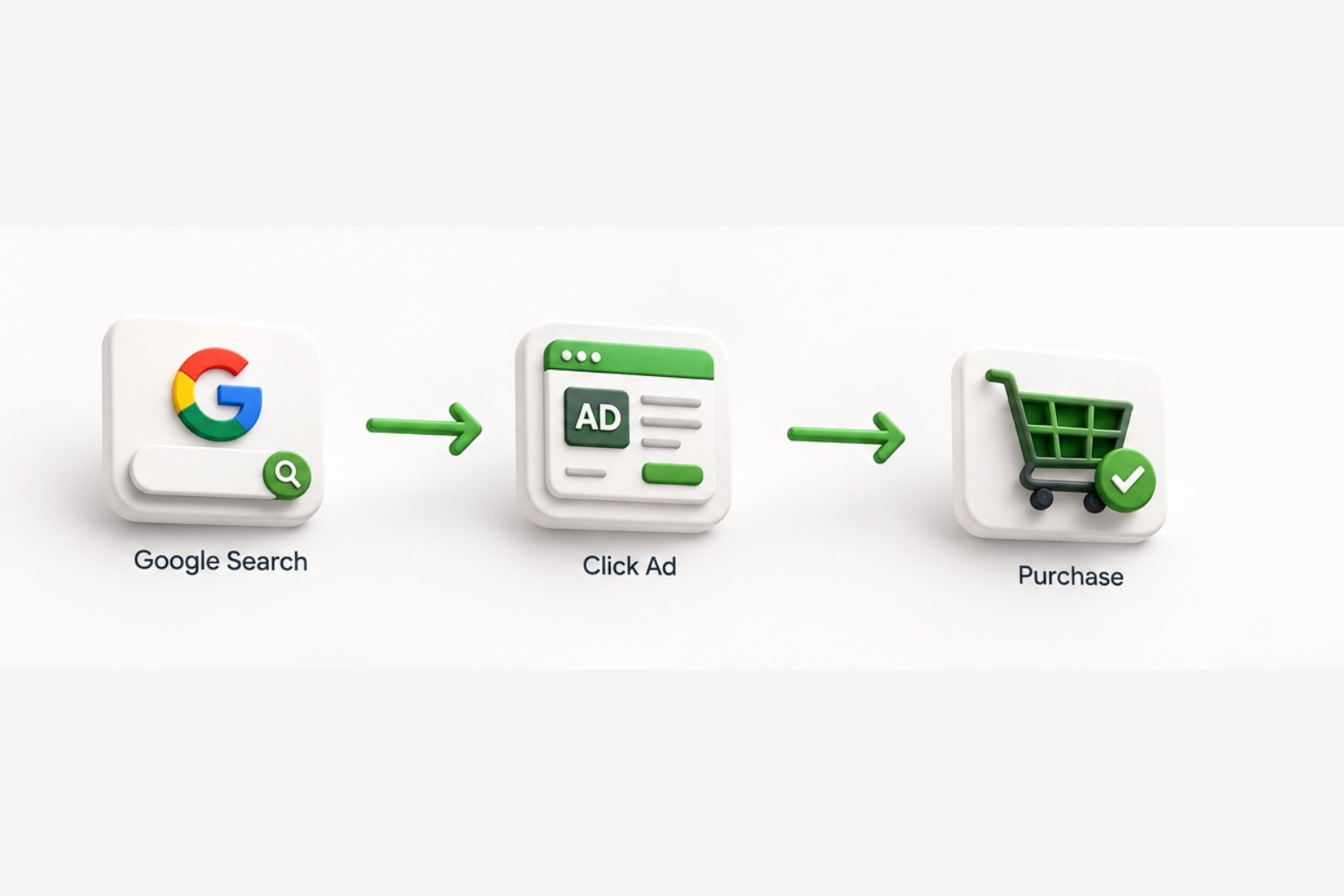
In reality, it often looks more like this:
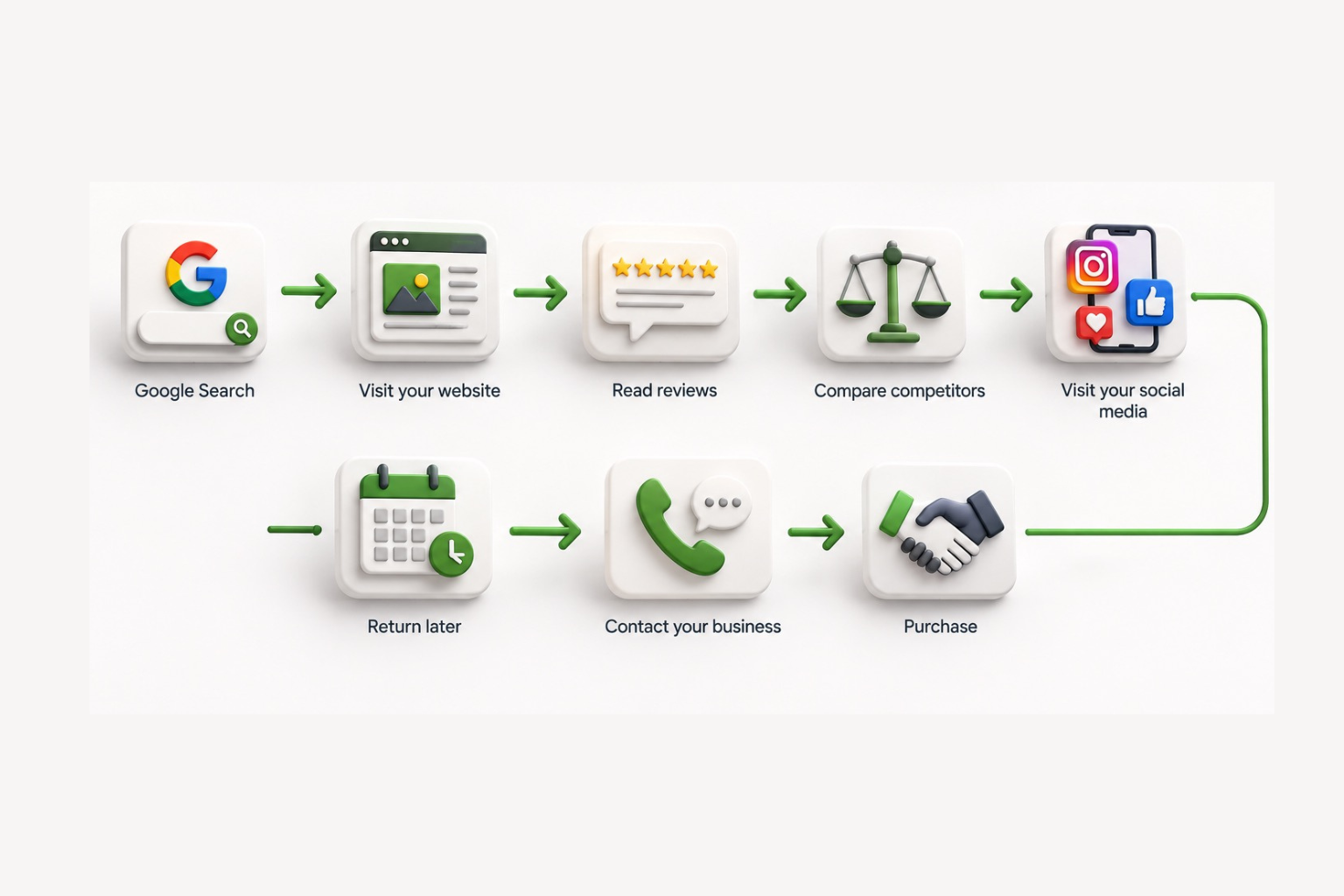
Understanding this longer decision-making process helps you build campaigns that support customers throughout their journey instead of expecting immediate conversions.
The businesses that perform best with Google Ads in Japan aren't always the ones with the biggest advertising budgets.
They're the ones that understand how Japanese customers search, compare, and make purchasing decisions.
Once you understand those behaviors, every part of your campaign—from keywords and ad copy to landing pages and follow-up becomes more effective.
Google Ads doesn't fail because Japan is difficult.
It fails when businesses assume Japan works exactly like every other market.
Let's keep the momentum. This next section is probably the most unique in the entire article.
One of the biggest misconceptions about Google Ads is that launching a campaign automatically leads to more customers.
It doesn't.
Google Ads is designed to bring qualified visitors to your website. What happens after they arrive is what determines whether your advertising investment becomes a profitable one.
Think of Google Ads as opening the front door to your business.
If the experience inside doesn't meet customer expectations, even the most well-optimized campaign will struggle to deliver results.
Many businesses focus on metrics like impressions, clicks, and click-through rates.
While these numbers are useful, they don't necessarily tell you whether your campaigns are helping your business grow.
A campaign with fewer clicks but a higher conversion rate can often generate significantly more revenue than one with thousands of visitors who never take action.
Instead of asking,
"How many clicks did we receive?"
Ask,
"How many qualified leads or customers did those clicks generate?"
That's the metric that matters.
Imagine someone searches for your service, clicks your ad, and lands on your website.
Within a few seconds they'll decide whether to stay or leave.
Your landing page should answer a few simple questions immediately:
If visitors have to search for these answers, many will simply leave.
A focused landing page often outperforms a general homepage because it's built around a single goal.
Related Resource: Explore our Landing Page Design Services to learn how optimized landing pages can improve campaign performance.
Foreign businesses sometimes underestimate how much trust influences purchasing decisions in Japan.
Visitors often look for reassurance before contacting a company.
Simple details can make a significant difference, including:
These elements may seem small individually, but together they help reduce uncertainty and encourage potential customers to take the next step.
Most searches today happen on mobile devices.
If your landing page loads slowly, requires excessive scrolling, or makes forms difficult to complete, you're likely losing potential customers before they even read your offer.
Before increasing your advertising budget, ask yourself:
Improving the mobile experience often produces a better return than simply spending more on ads.
One of the most common problems we see is sending every visitor to the same generic homepage.
Instead, each campaign should have a destination that matches the user's intent.
For example:
The closer the landing page matches the original search, the more likely visitors are to convert.
Successful campaigns don't rely on Google Ads alone.
They combine several elements working together:

If any step in that journey breaks down, campaign performance usually suffers.
That's why improving your website, messaging, and user experience is just as important as optimizing your ads.
It's easy to think that better advertising alone will solve performance issues.
In reality, the businesses that achieve the strongest results are those that improve the entire customer journey—not just their campaigns.
Google Ads brings the right people to your website.
Everything after the click determines whether they become customers.
That's why we believe Google Ads is only 50% of the equation. The other 50% is creating an experience that gives people confidence to choose your business.
Running Google Ads in Japan isn't necessarily difficult, but it does require a different approach.
Over the years, we've seen many foreign businesses make similar mistakes. Most of them aren't caused by Google Ads itself , they happen because campaigns are built using assumptions that worked in another country.
The good news is that these mistakes are avoidable once you understand how the Japanese market works.
One of the biggest mistakes businesses make is translating existing ads directly into Japanese.
While the translation may be technically correct, it doesn't always reflect how Japanese users naturally search or communicate.
Effective advertising isn't about translating words it's about adapting your message to the local market.
That includes using natural language, understanding search intent, and writing ad copy that feels relevant to Japanese customers.
Imagine seeing an advertisement written in Japanese, clicking on it, and suddenly landing on an English website.
For many users, that immediately creates uncertainty.
Even businesses that operate internationally should consider creating dedicated Japanese landing pages when targeting Japanese customers.
A localized landing page demonstrates that you've invested in understanding the market, making visitors more likely to stay, explore, and take action.
Related Resource: Discover how our Website Localization Services help businesses create websites that feel natural to Japanese audiences.
Keywords that perform well in English don't always have an equivalent in Japanese.
People often search using different phrases, levels of formality, or even completely different wording.
Successful campaigns begin with understanding how your audience searches not how you think they search.
Investing time in proper keyword research usually delivers far better results than simply translating an existing keyword list.
One of the fastest ways to waste advertising budget is running campaigns without measuring results.
If you don't know which keywords, ads, or landing pages generate enquiries or sales, you can't improve performance.
Before launching any campaign, make sure you're tracking the actions that matter most to your business, whether that's contact form submissions, phone calls, demo requests, or online purchases.
Data should guide every optimization decision.
More clicks don't always mean better results.
A campaign with a lower click-through rate but a higher conversion rate is often far more valuable than one that generates thousands of visitors who never become customers.
Instead of optimizing for traffic alone, focus on attracting the right audience—people who are genuinely interested in your products or services.
Quality almost always outperforms quantity.
Japan has one of the world's most mobile-connected populations.
If your landing page loads slowly, is difficult to navigate, or requires users to zoom in just to read the content, many potential customers will leave before taking any action.
Before increasing your advertising budget, test your website on multiple mobile devices.
A better mobile experience can improve conversion rates without increasing ad spend.
Perhaps the biggest misconception is believing that Google Ads alone will generate business growth.
Advertising brings people to your website.
Your brand, website, messaging, trust signals, and customer experience convince them to become customers.
The businesses that achieve the best results don't treat Google Ads as a standalone solution.
They integrate it into a broader digital marketing strategy that includes strong landing pages, SEO, localized content, and a clear customer journey.
That's why successful campaigns rarely depend on one marketing channel—they rely on several channels working together.
None of these mistakes are unusual.
In fact, many businesses make at least one of them when entering a new market.
The difference is that successful companies identify these issues early, adjust their strategy, and continue improving over time.
Google Ads rewards businesses that learn, test, and optimize not those that simply increase their advertising budget.
Avoiding these common mistakes won't guarantee success, but it will give your campaigns a much stronger foundation from the very beginning.
One of the most common questions we hear from foreign businesses entering Japan is:
"Should we invest in Google Ads or SEO first?"
The answer depends on your business goals, budget, and timeline.
Neither channel is inherently better than the other. They solve different problems, and in many cases, they work best together.

Google Ads delivers immediate visibility. Once your campaigns are approved, your business can begin appearing for relevant searches within hours.
SEO, on the other hand, takes time. It may take several months before your website begins ranking competitively, but those rankings can continue generating traffic long after the work is complete.
For many foreign businesses entering Japan, a balanced strategy often works best.
Google Ads generates immediate traffic while SEO builds long term visibility and reduces reliance on paid advertising over time.
Related Resource: Learn more about our SEO Services in Japan and how SEO complements Google Ads for sustainable growth.
It may seem unusual for a Google Ads guide to recommend not running Google Ads.
However, advertising isn't always the right solution.
If any of the following situations apply to your business, it's often worth solving these problems first.
Running campaigns before addressing these issues can lead to unnecessary spending without meaningful business results.
Sometimes improving your website, refining your positioning, or investing in SEO provides a stronger foundation before launching paid advertising.
Marketing isn't about choosing the fastest option.
It's about choosing the right one.
If a founder asked me where to start, I wouldn't open Google Ads immediately.
I'd begin by understanding the business.
Before spending any advertising budget, I'd identify the target audience, research competitors, and validate demand within Japan.
Without this foundation, even well managed campaigns can struggle.
Before sending traffic anywhere, I'd make sure the website reflects the expectations of Japanese customers.
This includes localized messaging, clear navigation, trust signals, and a straightforward way for visitors to contact the business.
Every important action should be measurable before launching campaigns.
That includes contact forms, consultation bookings, phone calls, and online purchases.
Without data, optimization becomes guesswork.
Rather than trying every campaign type immediately, I'd begin with a focused Search campaign targeting high intent keywords.
This provides valuable data while keeping the campaign easier to manage.
The first month isn't about maximizing spend.
It's about understanding which keywords attract qualified visitors, which ads generate enquiries, and which landing pages convert best.
Those insights should guide every future decision.
Once the campaign consistently delivers results, I'd gradually increase the budget and explore additional opportunities such as Performance Max, remarketing, SEO, or content marketing.
Growth should be based on evidence, not assumptions.
A successful Google Ads strategy isn't built overnight.
It's built through continuous learning, testing, and improvement.
Yes. Foreign businesses can advertise in Japan, but campaigns generally perform better when they're supported by localized landing pages and messaging tailored to Japanese customers.
That depends on your audience. If you're targeting Japanese customers, Japanese language campaigns are usually the better choice. If you're targeting expatriates or international professionals, English campaigns may also be effective.
Neither is better in every situation.
Google Ads delivers immediate visibility, while SEO focuses on long term organic growth. Many businesses benefit from using both together.
There's no universal budget.
Start with an amount you're comfortable testing, measure performance carefully, and increase investment only after identifying campaigns that consistently generate results.
Google Ads is an excellent starting point for many businesses, while Yahoo! Ads may also be worth considering depending on your industry and target audience.
If you're targeting Japanese customers, a localized landing page will almost always perform better than sending visitors to an English page.
Google Ads can begin generating traffic shortly after campaigns launch. However, meaningful optimization usually takes several weeks as enough data becomes available.
Yes. Google Ads allows businesses to target specific cities, prefectures, or regions, making it possible to focus advertising where it's most relevant.
Before launching your first campaign, make sure you've completed the following:
Running Google Ads successfully in Japan isn't just about launching campaigns.
It's about understanding how Japanese customers search, compare, and build trust before making a purchase.
At Boostify, we help foreign businesses create localized Google Ads strategies designed for sustainable growth, not simply more traffic.
Whether you're entering Japan for the first time or looking to improve an existing campaign, we'd be happy to help you build a strategy that supports your business goals.
Book a free consultation with Boostify.
Boostify is a bilingual digital marketing agency based in Japan that helps foreign businesses grow through Google Ads, SEO, website localization, web design, LINE marketing, and digital strategy.
Our mission is simple: to help international businesses and local businesses navigate the Japanese market with practical, data driven marketing strategies that build long term growth.