
Growth
Saifuresu: Digital Loyalty System for Businesses
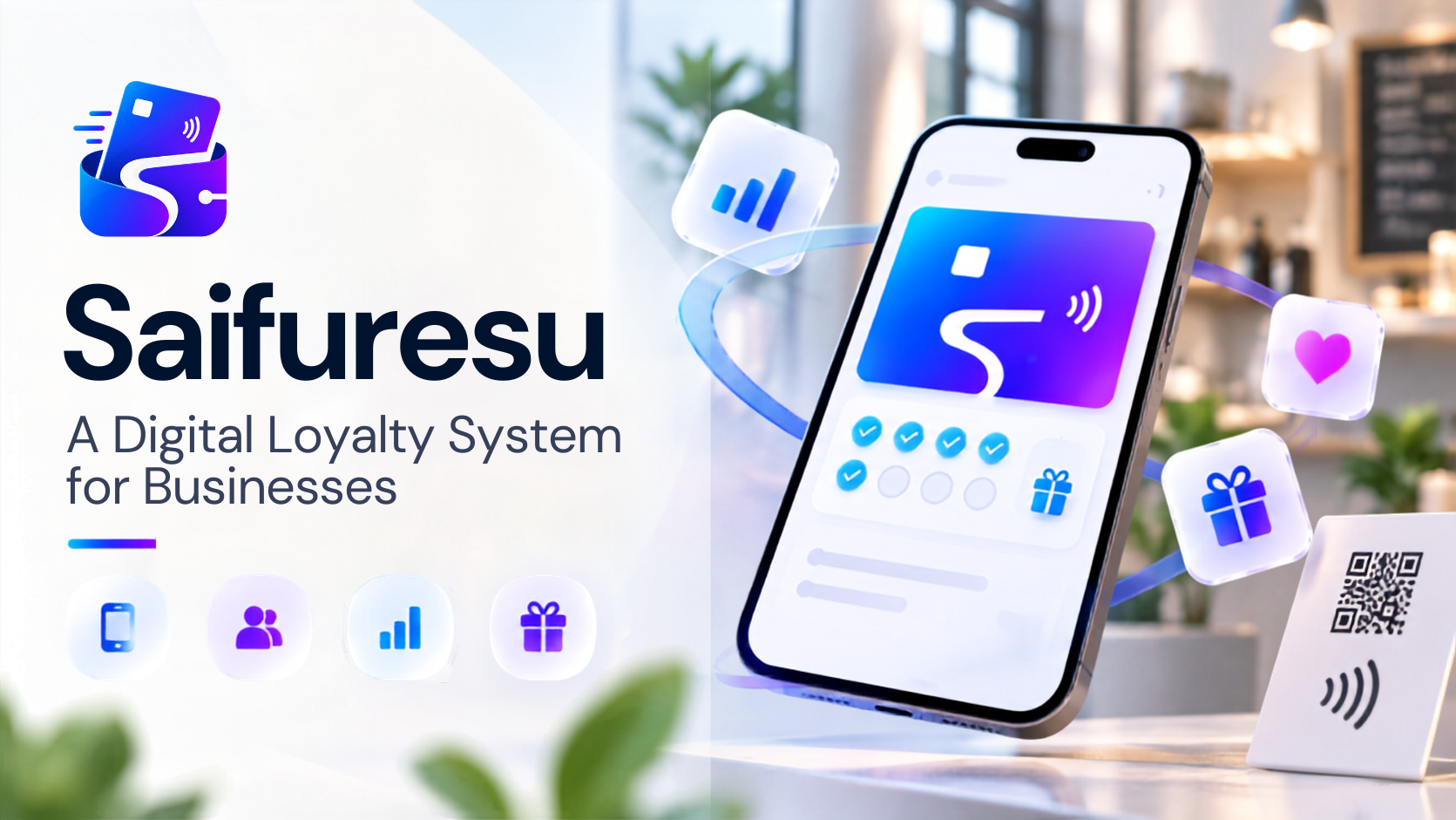
Saifuresu is a web-based digital loyalty and stamp card system that helps businesses replace traditional paper stamp cards.

Boostify
September 15, 2026
A loyalty card has a modest job: give customers a reason to come back and make that reason easy to understand. For many cafés, salons, restaurants, retailers, and service businesses, the familiar paper stamp card has done this for years. It is tangible, inexpensive to introduce, and simple to explain at the counter.
But paper cards also create friction. Customers leave them at home, lose them, or forget that they have them. Staff may need to answer questions about damaged cards or missed stamps. When a business changes a reward or wants a clearer view of how its programme is being used, the paper card offers little flexibility.
A digital loyalty system can address some of those practical issues, but it only works when customers can join and use it without unnecessary effort. Saifuresu is a digital loyalty and stamp card system built around a web-based Saifuresu Card. It gives businesses a way to provide an individual digital loyalty card without requiring customers to download a dedicated app.
This guide explains what local businesses should consider when moving from paper cards to digital loyalty, how Saifuresu works based on its supplied features, and how to introduce a programme that is clear for customers and manageable for the team.
Paper stamp cards are not inherently ineffective. Their main strength is that the customer immediately understands the exchange: make a qualifying purchase, receive a stamp, and collect a reward after completing the card. That simplicity is worth preserving.
The difficulty appears once the programme becomes part of everyday operations. A customer may have forgotten a card, lost a partly completed card, or ask whether a previous visit can be counted. A team member may apply stamps differently from a colleague. If the business introduces a seasonal offer or changes the reward, old cards can remain in circulation alongside the new rules.
Paper also separates the programme from the customer’s phone, where many people already keep practical items such as tickets, payment methods, and store information. A customer cannot use a physical card that is sitting in a drawer. This does not mean every business needs a complex loyalty platform. It means the programme should be available at the moment a customer is ready to use it.
The underlying issue is consistency. A loyalty programme succeeds when the promise is easy to notice, the next step is obvious, and staff can administer it confidently. The same principle applies across the wider customer experience. Understanding the digital customer journey in Japan can help businesses view a return visit as part of an ongoing relationship rather than an isolated transaction.
A digital solution should therefore be assessed as an operational tool, not just as a replacement for a piece of printed card. The right question is not "Is digital more modern?" It is "Will this make earning and redeeming rewards easier for our customers and our staff?"
A digital loyalty platform should retain the clarity of a paper stamp card while removing avoidable points of friction. Before comparing vendors, define the problems the business actually wants to solve. For some operators, the priority is giving patrons a medium they are far less likely to misplace. For others, it is establishing an audited process for tracking stamps and redemptions. A business with several locations may also need a consistent way to explain the initiative across diverse teams.
A useful system does not need to make every interaction elaborate. In fact, a complicated joining process can undermine a simple reward. Customers should understand what they receive, how they earn it, and what they can redeem. Staff should know what to do at the counter without interrupting service.
It is also worth separating a loyalty programme from acquisition marketing. A digital card is primarily designed for people who have already visited or purchased. New-customer discovery still depends on being easy to find, giving people accurate information, and presenting a credible local presence. A local SEO and Google Business Profile strategy in Japancan support that earlier stage, while a loyalty mechanism gives the enterprise a structured reason to welcome patrons back after their initial visit.
The technology behind a loyalty programme matters, but customers usually care more about the value they receive from participating. A digital card should therefore make the relationship between an action and a reward immediately understandable. If customers have to ask repeatedly how many stamps they need, which purchases qualify, or when a reward can be used, the programme becomes harder to maintain.
For local businesses, simplicity can be especially important because loyalty interactions often happen during busy moments. A café may introduce the card while several customers are waiting to order. A salon may mention it while a client is paying and preparing to leave. A retailer may need to explain the programme while completing a purchase. In each situation, the loyalty system should support the existing customer experience rather than create another lengthy process.
A useful loyalty programme can therefore be built around a few clear principles:
The objective is not to add technology for its own sake. It is to create a repeat-visit mechanism that customers can understand and staff can operate consistently.
The first decision is how a customer receives and accesses the card. Requiring another downloaded app can create a barrier for someone who is joining quickly at a busy counter. It can be particularly unhelpful when the reward is modest or the customer is visiting for the first time.
A web-based card offers a different route: the customer can access the loyalty card through the web rather than first installing a dedicated app. That approach keeps the programme focused on the customer’s immediate task—joining, collecting a stamp, and eventually using a reward.
Ease of participation is not only a technical consideration. Use plain language in-store:
The counter workflow matters as much as the customer-facing card. Decide who can issue stamps, when they are issued, how a redemption is confirmed, and what happens when an unusual situation occurs. Examples include a refund, a qualifying purchase made without the customer present, or a customer who asks about a past transaction.
Write these rules down in a short internal guide using the same language that appears in customer materials. Platforms like Saifuresu allow businesses to oversee patron directories, issue digital stamps, and configure perks directly through web-enabled interfaces, providing structured operational consistency compared to standalone paper cards.
Customer loyalty begins after acquisition, which means a digital stamp card should be considered alongside the channels that originally brought the customer to the business.
A customer might first discover a local business through Google Search, Google Maps, social media, advertising, a recommendation, or the company website. That first interaction has a different purpose from the loyalty programme. Acquisition channels help the customer discover and choose the business; loyalty tools give an existing customer another reason to return.
This distinction helps businesses avoid expecting one tool to solve every marketing problem. A loyalty card cannot replace a strong website, accurate local listings, useful content, or customer acquisition campaigns. In the same way, spending continuously on acquisition without thinking about repeat customers can leave a business dependent on finding new customers every month.
Businesses considering this broader relationship can also explore Boostify's guide to email marketing strategies for businesses in Japan, which discusses customer retention, repeat purchases, engagement, and long-term customer relationships.
The strongest approach is therefore to think about the complete journey:
Saifuresu is intended to operate within that fourth stage as a digital loyalty and stamp card system rather than as a replacement for the business's entire marketing strategy.
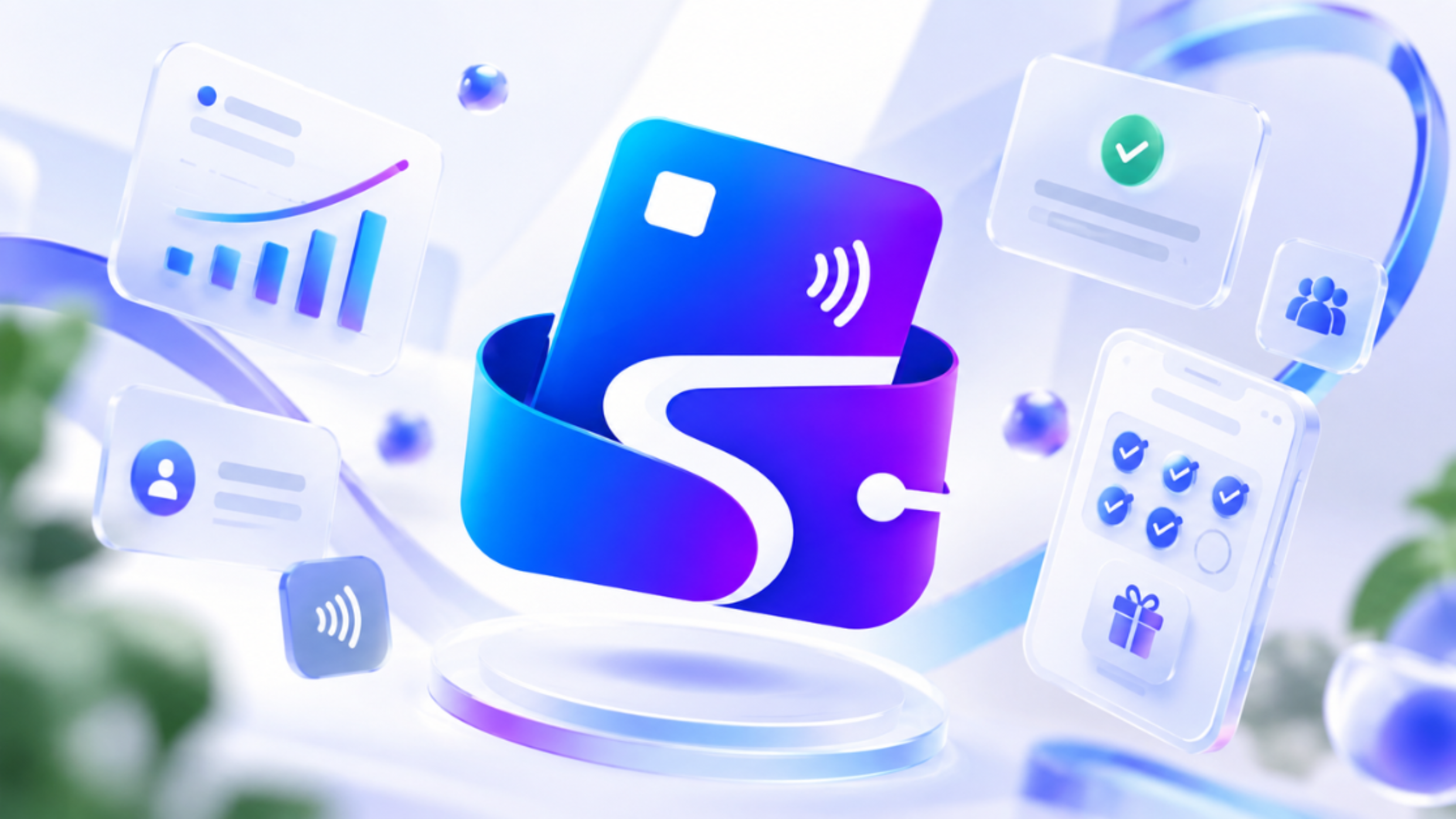
Saifuresu is a digital loyalty and stamp card system designed specifically for local businesses and independent operators. Its core architecture centers on the Saifuresu Card: a web-based digital card that can be deployed for an individual business without friction. Customers do not need to download a dedicated app in order to use the web-based card.
For a local operator, the value of this model is practical. Instead of asking a consumer to carry a paper card, the shop can offer a browser-optimized layout tailored to its unique branding. The business can manage customers, stamps, and rewards through the system. The customer interaction can use NFC touch or QR code support, depending on the setup and the situation at the point of service.
These features describe the mechanics of the system, not an automatic outcome. A digital card does not guarantee repeat business by itself. The reward must still be relevant, the earning rule must be clear, and the staff experience must be reliable. Technology should reduce the effort required to run a good programme, rather than distract from it.
Instead of thinking about Saifuresu only as a digital version of a printed card, it is useful to look at the individual parts of the customer and merchant experience that the system brings together.
Based on the current Saifuresu product capabilities, businesses can use:
These capabilities are designed around the loyalty-card experience rather than requiring customers to install a dedicated Saifuresu mobile application before they can participate.
For a business evaluating different loyalty approaches, that distinction matters. A dedicated application can make sense when a company has enough functionality and customer engagement to justify asking people to install it. A simpler local loyalty programme may have a different requirement: allow the customer to access the card with as little unnecessary friction as possible.
Saifuresu's web-based approach is intended for that type of experience. Apple Wallet and Google Wallet remain optional additions rather than prerequisites for using the Saifuresu Card.
The Saifuresu Card is web-based, which is important for businesses that want to avoid making a dedicated app download a condition of participation. The customer can use a digital card without adding another app to their device.
This can make the invitation at the counter more straightforward. Rather than framing the programme as a software installation, staff can explain the customer benefit: a digital stamp card for that business and a clear path to a reward.
Businesses can optionally make the card available for addition to Apple Wallet or Google Wallet. This feature is structured around distinct operational choices:
Saifuresu supports NFC touch interaction and QR codes. Both are familiar ways to connect a physical location with a digital action, but the best choice is the one that fits the counter environment.
NFC can suit a setup where the customer can touch a compatible device or point with their phone. QR codes can be useful where a visible, scannable prompt is more practical. Test the intended customer path before launch to ensure the method is visible, understandable, and quick enough at the point of service.
For enterprises developing their broader online presence, Boostify’s digital marketing services can be relevant when the goal is to connect local acquisition channels, website messaging, and customer retention in a single plan.
NFC and QR codes should not be viewed as competing technologies where every business must select a universal winner. They are simply different ways of connecting the physical customer experience with the digital card.
The most appropriate setup depends on how the business operates. A compact counter may benefit from a clearly positioned touch point. Another location may find that a visible QR code is easier for customers to notice and understand. Some businesses may want to explain the card personally, while others may prefer signage that lets interested customers begin the process themselves.
Before introducing the system widely, businesses should test the complete customer journey from the perspective of someone who has never seen Saifuresu before. Useful questions include:
Small usability problems are easier to identify during testing than after many customers have already encountered them. A technically functioning system can still create friction if the physical placement, instructions, or staff explanation is unclear.
Moving away from paper requires a deliberate shift in how front-line staff view customer data and incentive management. When a business implements a solution like the tools found on Saifuresu, the primary cultural hurdle is often ensuring that every employee feels comfortable guiding patrons through the digital onboarding process during peak operational hours.
Staff members must understand that digital loyalty cards eliminate human error. Quick checklist for a smooth transition:
The technology should support the programme, not define it. Before implementation, write down the answers to four questions: What customer action earns a stamp? How many stamps are needed? What is the reward? When and how can it be redeemed?
A programme becomes difficult to explain when it has too many exceptions. If different products earn different numbers of stamps, special days have separate rules, and rewards have multiple conditions, customers and staff may struggle to remember the details. Complexity can be justified for certain businesses, but it should never be accidental.
The same loyalty structure will not work equally well for every business. Customer frequency should influence how quickly a reward can realistically be reached.
A customer may visit a café several times in one week, while a salon customer might return once every month or two. A restaurant may have frequent regulars alongside tourists or occasional visitors. A service business may see the same customer only several times each year.
This means businesses should avoid copying another company's stamp structure without considering their own customer behaviour. Requiring ten visits may feel achievable in one industry and extremely distant in another.
Before launching, review the typical customer journey and ask how many normal visits would be required to reach the reward. The programme should be financially manageable for the business while still giving customers a reason to care about their progress.
The reward itself also needs to be easy to understand. Complicated conditions may reduce the simplicity that makes stamp cards attractive in the first place. A clear programme gives both customers and staff confidence about what happens at each stage.
A sound earning rule is linked to a customer behaviour the business wants to encourage. It may be a qualifying purchase, an appointment, or another clearly defined action. The rule must be specific enough that staff can apply it consistently and patrons can recognise when they are eligible.
The reward should be meaningful in context. Consider the customer’s typical purchase cycle. A daily coffee buyer and a client who visits a spa every few months experience the same number of required stamps very differently.
The best time to introduce a loyalty card is usually when it connects naturally to a completed visit. For example, after payment, a staff member can briefly mention the digital stamp card and explain the next reward, keeping the invitation tied to a positive, recent experience.
For a broader view of how clear, useful content supports customer decisions, see Boostify’s guide to content marketing in Japan.
A loyalty card is most useful when it follows a good first experience. Local marketing brings a potential customer to a business’s website, map listing, social profile, or front door. The retention framework then gives that individual a clear invitation to return.
This does not require treating every channel as a promotion engine. A Google Business Profile should provide accurate business details. A website should make services, products, location, and contact routes easy to understand.
For commercial entities that use paid acquisition, it is useful to distinguish between the campaign’s job and the loyalty system’s job. Google Ads in Japan can help an enterprise think through search intent before investing in ads. Systems like those featured on Saifuresu can then anchor the post-visit phase.
Businesses often spend more time thinking about how to acquire a customer than what happens after that customer has purchased. Search visibility, advertising, websites, social media, and local listings can all help create the first interaction, but the economics of customer acquisition become more difficult when every future purchase requires another paid or promotional touchpoint.
Retention strategies address a different part of the relationship. A digital loyalty card can provide a visible reason for an existing customer to think about another visit, while other channels can continue the wider relationship.
Boostify's article on digital marketing costs in Japan explains why businesses should think about marketing channels as parts of a connected strategy rather than isolated investments. A customer may discover a company through one channel, research it through another, visit the business, and later return because of a positive experience and an effective retention mechanism.
For local businesses, that connected approach can include:
Saifuresu fits into this wider system as the digital loyalty layer. It does not need to perform every marketing function to be useful; it needs to perform its own role clearly and consistently.
Boostify Tip: Treat the loyalty card as the retention layer of a customer journey. First make it easy for people to find and choose the business; then make it easy for satisfied customers to return.
Any organization that manages customer information should be deliberate about what it collects, why it collects it, who can access it, and how it explains those practices. This is particularly important for merchants operating in Japan under the Act on the Protection of Personal Information and related guidance.
The product context confirms that Saifuresu equips operators with the capability to oversee patron metrics, issue digital stamps, and distribute rewards. It does not, by itself, determine a merchant's legal responsibilities. Each operator remains responsible for establishing appropriate customer communications and internal compliance processes.
A measured rollout reduces confusion and lets the business improve the scheme before promoting it widely.
If the enterprise wants support aligning its website, local visibility, and retention activity, Boostify’s digital marketing guide for businesses in Japan provides wider planning context. To discuss a marketing plan tailored to your market objectives, contact Boostify.
Launching a loyalty programme is only the beginning. Businesses should periodically review whether customers understand it and whether staff are using it consistently.
The purpose of measurement is not simply to collect more data. It is to identify practical problems that can be improved. For example, if many customers hear about the programme but few begin using it, the joining process or explanation may need attention. If customers collect early stamps but rarely reach the reward, the programme structure may be too demanding for the normal purchase cycle.
Useful operational questions include:
Businesses can then adjust their own loyalty strategy based on what they observe rather than assuming the original setup must remain permanent.
This is one advantage of treating loyalty as an ongoing customer experience rather than a one-time promotional campaign. The programme can be reviewed alongside other retention activities and the wider customer journey as the business learns how its customers actually behave.
Saifuresu may be a good fit for companies that want to replace a paper loyalty card with a digital alternative while avoiding a required dedicated app download. Its web-based Saifuresu Card, NFC touch interaction, QR code support, optional Apple Wallet and Google Wallet integration, and administrative controls give an operator practical building blocks for a bespoke program.
To explore the product directly, visit Saifuresu.
Boostify Tip: Treat the loyalty card as the retention layer of a customer journey. First make it easy for people to find and choose the business; then make it easy for satisfied customers to return.
Saifuresu is a digital loyalty and stamp card system for businesses. It provides a web-based Saifuresu Card that merchants can use to power their own custom customer retention initiatives.
No dedicated app download is required for the web-based Saifuresu Card. Apple Wallet and Google Wallet addition is entirely optional.
The supplied product information states that Saifuresu supports NFC touch interaction and QR codes. A business can choose an approach that works best for its counter flow and point of service.
Yes. The platform provides operators with direct administration tools to handle patron records, tracking, stamp allocation, and reward fulfillment.
Define the qualifying action, number of stamps, reward, redemption conditions, staff workflow, customer explanation, and approach to customer information. Test the complete in-store process before promoting it widely.
No. A loyalty system is primarily a retention tool for consumers who have already visited or purchased. Local visibility, accurate business information, a useful website, and other marketing activity still help new prospects discover the brand.
A digital loyalty programme works best when it is easy to join, easy to use, and supported by clear operations. If you want a web-based alternative to paper stamp cards with NFC and QR code support, explore Saifuresu. If you also need help connecting local visibility, website messaging, and customer retention, Boostify can help you plan the wider digital strategy.