
Email Marketing
Why Email Marketing Works Better in Japan Than Almost Anywhere Else | Boostify Japan
Running a business in Japan? Email marketing brings customers back better than ads or social media. Here is why it works.

Boostify
July 20, 2026
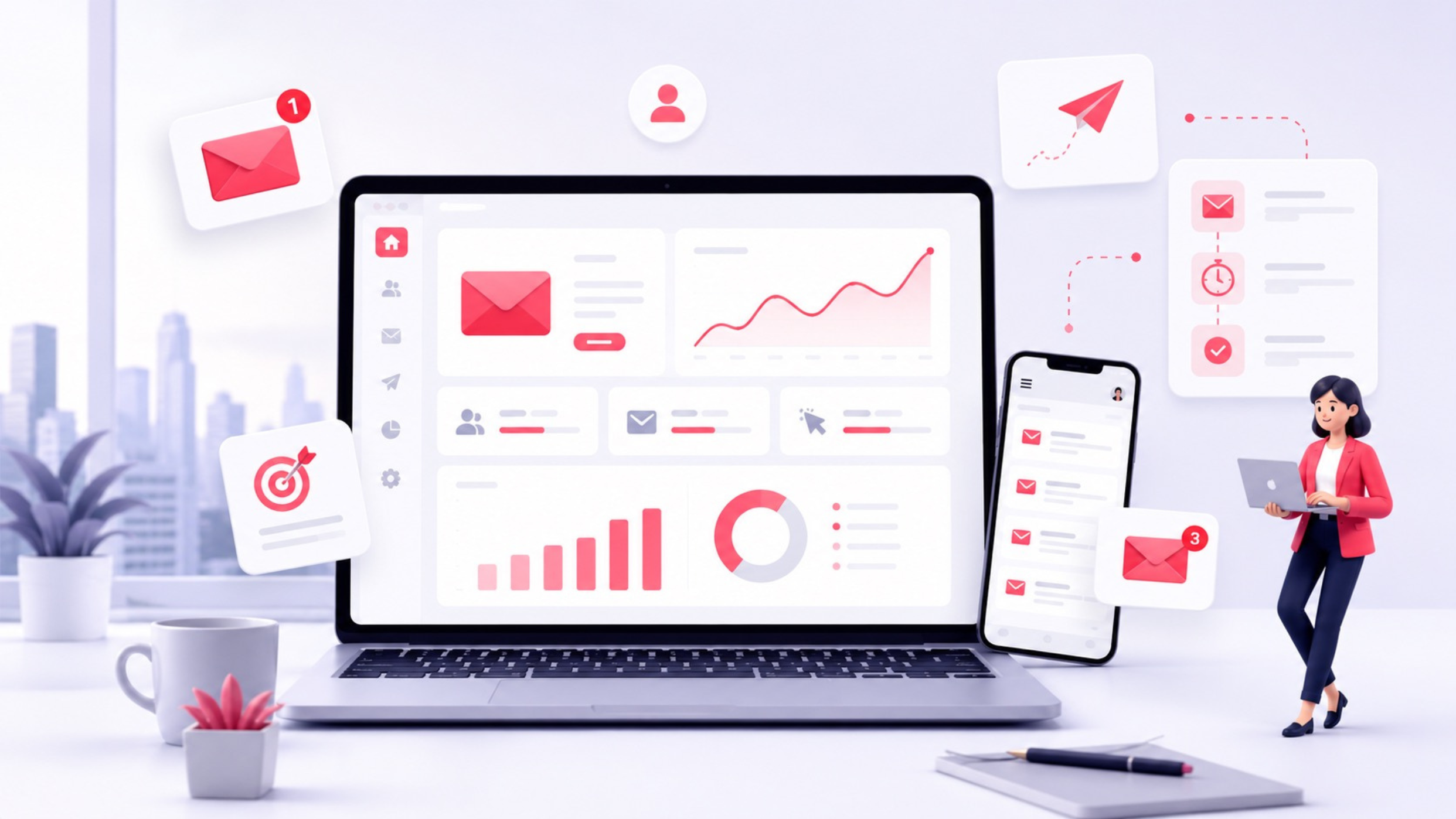
Running a business in Japan? Email marketing brings customers back better than ads or social media. Here is why it works.

Picture this. You open a small cafe in Shibuya. You spend months perfecting your menu, designing the space, training your staff. You launch an Instagram account and post every single day. You run a few Google Ads. A few Meta ads. People come in. They enjoy it. They leave.
Then nothing. No repeat visits. No loyalty. Just an endless cycle of chasing new faces while the customers who already loved your coffee slowly forget you exist. Your monthly ad spend keeps climbing just to stay in the same place. Sound familiar?
This is the reality for thousands of small business owners across Tokyo and Osaka right now. And the reason is not that their product is bad or their marketing is wrong. The reason is they are missing one channel that changes everything.
Email marketing. And in Japan, it works better than almost anywhere else in the world.
Before we talk about the solution, let us be honest about the problem. Running a small business in Japan and trying to build customer loyalty through social media and ads alone is genuinely hard. Here is what most business owners in Tokyo and Osaka are experiencing right now:
The core issue is that social media and ads are rented channels. You pay every time you want to reach someone. Email is an owned channel. Once someone gives you their email address, you can reach them directly, any time, without paying for it again.
In Japan specifically, this matters even more than in other markets. Japanese consumers expect brands they trust to communicate with them regularly. When you go silent, they assume you are no longer a priority.
One of the biggest missed opportunities for many businesses in Japan is failing to reconnect with customers who showed interest but never completed their purchase. Abandoned cart emails are one of the most effective ways to recover lost sales while building stronger customer relationships. Learn how to implement them effectively in our guide to How to Use Abandoned Cart Emails to Recover Sales in Japan.
Here is something most digital marketing agencies will not tell you: Japan is one of the best countries in the world for email marketing. Not because of the tools or the technology, but because of the culture. Let me explain.
Japanese consumers check email every single day
Unlike in many Western markets where email inboxes are overloaded and open rates are declining, Japanese consumers have a deeply ingrained habit of checking and reading brand emails regularly. This is not accidental. It was built over decades by Japan's biggest brands.
The result is an audience that is far more receptive to brand emails than almost anywhere else. When you build an email list in Japan and communicate consistently, you are entering a channel that your customers already use and already trust.
Trust comes before the transaction in Japan
Japanese consumer behaviour is fundamentally different from Western markets. Customers here do extensive research before buying. They read carefully. They evaluate slowly. They are not impulsive. And once they trust a brand, their loyalty runs deep.
Email is the perfect channel for this kind of relationship because it allows you to build trust over time, not in a single ad impression. Every email you send is an opportunity to:
Membership culture is everywhere in Japan
Walk into any convenience store, department store, or restaurant chain in Japan and within 60 seconds you will be asked to join a membership program. This is not a coincidence. Japanese consumer culture is built around points, memberships, and loyalty programs in a way that is genuinely unique in the world.
Email sits at the heart of every one of these programs. When you ask a customer for their email in Japan, most of them understand that means they are joining your community. They expect communication. They want to feel like members, not just customers.
This is the single biggest cultural advantage email marketing has in Japan. Your customers are already primed to receive and engage with brand emails. You just need to show up consistently with content that is worth reading.
This is not theory. Here is what small businesses and growing companies across Japan are actually doing with email marketing right now:
The restaurant that fills slow Tuesday nights
A popular izakaya in Shinjuku was struggling with empty tables on weekday evenings. They built a simple email list of regular customers and started sending a weekly email every Monday morning. The email was simple: a warm message from the owner, the week's special dish, and a gentle invite to come in on a quiet weeknight.
The e-commerce store that stopped losing sales
A small Japanese skincare brand selling online was losing almost 70 percent of potential sales to abandoned carts. Customers were adding products and leaving without buying. They set up a simple two-email abandoned cart sequence: one email one hour after abandonment, one email 24 hours later.
The fitness studio that stopped losing members
A boutique fitness studio in Osaka was losing members every month with no visibility into why or when it was happening. They built a simple monthly newsletter combining workout tips, member spotlights, and upcoming class schedules, along with an automated email sequence that triggered when a member had not visited for 14 days.
The foreign-owned boutique that built a bilingual audience
A small boutique in Ginza owned by a foreign entrepreneur was struggling to connect with both Japanese and international customers through a single channel. They built a bilingual email list and started sending a fortnightly newsletter in both English and Japanese, highlighting new arrivals, styling tips, and local Tokyo cultural moments.
Most businesses in Tokyo and Osaka that try email marketing and give up are not doing it wrong because they are not good at marketing. They are doing it wrong because nobody told them the Japan-specific rules. Here are the most common mistakes and exactly why they hurt:
Once every few months is not a strategy. Customers forget you exist. Once a week or once a fortnight is the minimum for building real recall. Sending too infrequently.
Generic subject lines like Special Offer or Don't Miss Out get ignored or deleted. Japanese inboxes are trained to filter these. Be specific, be personal, be genuinely useful. Writing subject lines that feel like spam.
If you have a bilingual audience, send bilingual content or segment your list. Sending a Japanese customer an English-only email signals that you do not know them. Treating Japanese and international customers the same way.
Sending a discount code in your first email to a new subscriber is a Western tactic that does not land the same way in Japan. Lead with value. Earn the relationship first. Promoting before building trust.
A first-time subscriber needs a different message than someone who has bought from you five times. Treating them the same wastes both their attention and your opportunity. No segmentation between new and loyal customers.
If your email marketing depends on you finding time to write and send every week, it will stop during your busiest periods. The businesses winning with email in Japan have automated sequences running while they sleep. No automation so everything is manual and inconsistent.
avoiding these mistakes is only the first step. Building an email marketing strategy that consistently generates opens, clicks, and customer loyalty requires understanding what actually works in the Japanese market. If you're looking for practical tactics and proven approaches, read our complete guide to the Best Email Marketing Strategies That Work in Japan.
Now that we have covered the why and the what not to do, here is what a well-built email marketing system for a Japan-based business looks like in 2026:
Frequency and timing
Subject lines that work in Japan
The automations every Japan business needs
Segmentation basics
You do not need a complex CRM to do this well. Most small businesses in Tokyo and Osaka can get 80 percent of these results with a well-configured Mailchimp, Klaviyo, or Benchmark Email Japan account.
At Boostify Japan, we are a digital marketing agency based in Japan working specifically with small and growing businesses in Tokyo, Osaka, and across the country. Email marketing is one of the services we are most proud of, and it is one of the highest return investments we make for our clients.
Here is what working with Boostify Japan on email marketing actually looks like:
We work with businesses across Tokyo and Osaka who are tired of spending on ads that bring people in once and never again. Email is how you change that equation. And in Japan, it works better than almost anywhere else in the world.
If you are running a business in Japan and want to stop chasing new customers and start keeping the ones you already have, email is where it starts.
Book a free 30 minute consultation with Boostify Japan. We will look at your current situation, tell you exactly what we would do, and give you a clear picture of what results are realistic for your specific business in Tokyo or Osaka.
No pressure. No generic pitch. Just a real conversation about your business and whether email marketing is the right next move.
Book Your Free Consultation with Boostify Japan
The foreign-owned boutique that built a bilingual audience
A small boutique in Ginza owned by a foreign entrepreneur was struggling to connect with both Japanese and international customers through a single channel. They built a bilingual email list and started sending a fortnightly newsletter in both English and Japanese, highlighting new arrivals, styling tips, and local Tokyo cultural moments.
Most businesses in Tokyo and Osaka that try email marketing and give up are not doing it wrong because they are not good at marketing. They are doing it wrong because nobody told them the Japan-specific rules. Here are the most common mistakes and exactly why they hurt:
Once every few months is not a strategy. Customers forget you exist. Once a week or once a fortnight is the minimum for building real recall. Sending too infrequently.
Generic subject lines like Special Offer or Don't Miss Out get ignored or deleted. Japanese inboxes are trained to filter these. Be specific, be personal, be genuinely useful. Writing subject lines that feel like spam.
If you have a bilingual audience, send bilingual content or segment your list. Sending a Japanese customer an English-only email signals that you do not know them. Treating Japanese and international customers the same way.
Sending a discount code in your first email to a new subscriber is a Western tactic that does not land the same way in Japan. Lead with value. Earn the relationship first. Promoting before building trust.
A first-time subscriber needs a different message than someone who has bought from you five times. Treating them the same wastes both their attention and your opportunity. No segmentation between new and loyal customers.
If your email marketing depends on you finding time to write and send every week, it will stop during your busiest periods. The businesses winning with email in Japan have automated sequences running while they sleep. No automation so everything is manual and inconsistent.
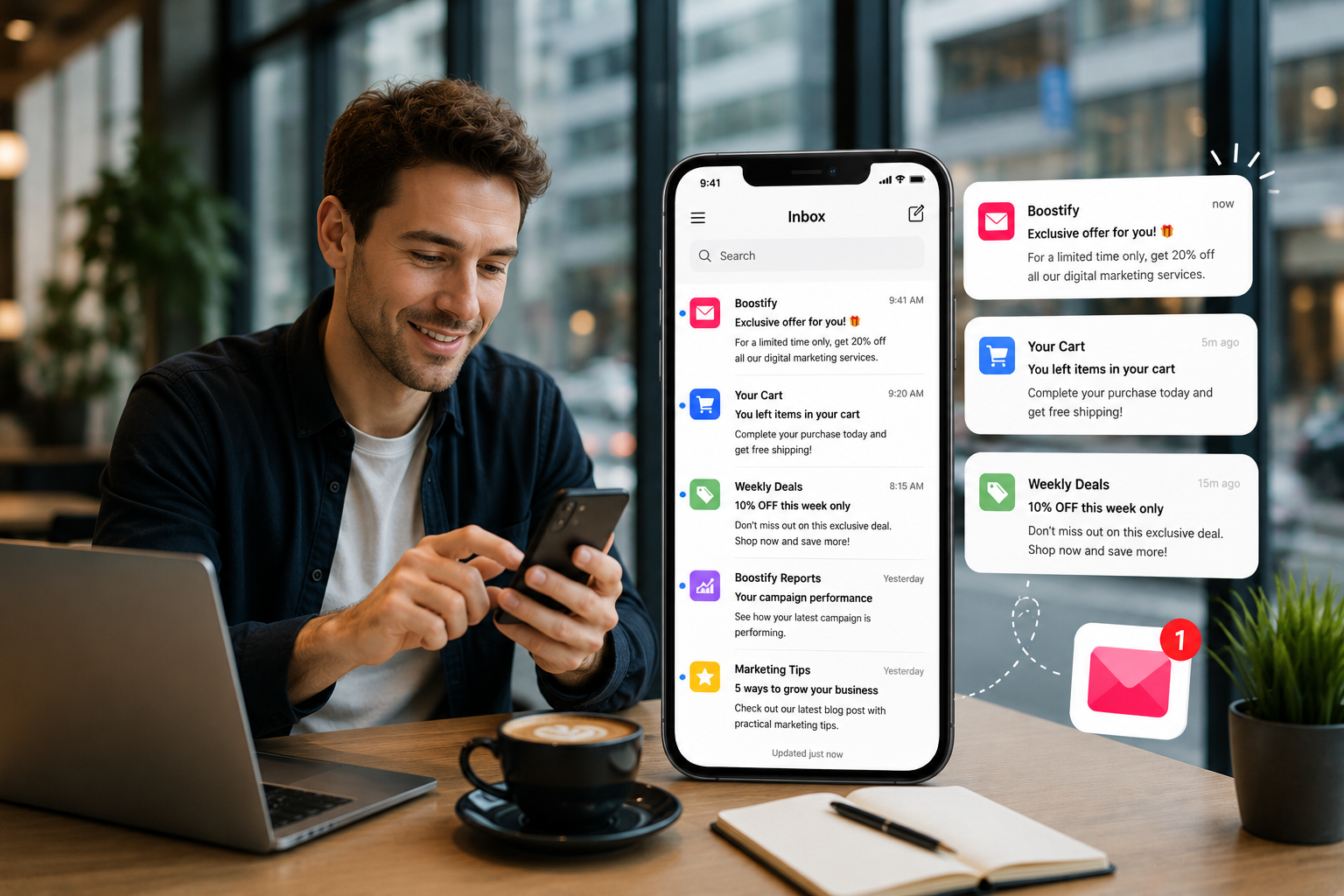
Now that we have covered the why and the what not to do, here is what a well-built email marketing system for a Japan-based business looks like in 2026:
Frequency and timing
Subject lines that work in Japan
The automations every Japan business needs
Segmentation basics
You do not need a complex CRM to do this well. Most small businesses in Tokyo and Osaka can get 80 percent of these results with a well-configured Mailchimp, Klaviyo, or Benchmark Email Japan account.
At Boostify Japan, we are a digital marketing agency based in Japan working specifically with small and growing businesses in Tokyo, Osaka, and across the country. Email marketing is one of the services we are most proud of, and it is one of the highest return investments we make for our clients.
Here is what working with Boostify Japan on email marketing actually looks like:
We work with businesses across Tokyo and Osaka who are tired of spending on ads that bring people in once and never again. Email is how you change that equation. And in Japan, it works better than almost anywhere else in the world.
If you are running a business in Japan and want to stop chasing new customers and start keeping the ones you already have, email is where it starts.
Book a free 30 minute consultation with Boostify Japan. We will look at your current situation, tell you exactly what we would do, and give you a clear picture of what results are realistic for your specific business in Tokyo or Osaka.
No pressure. No generic pitch. Just a real conversation about your business and whether email marketing is the right next move.